
Blog
Release date:Mar 30, 2026
Share:
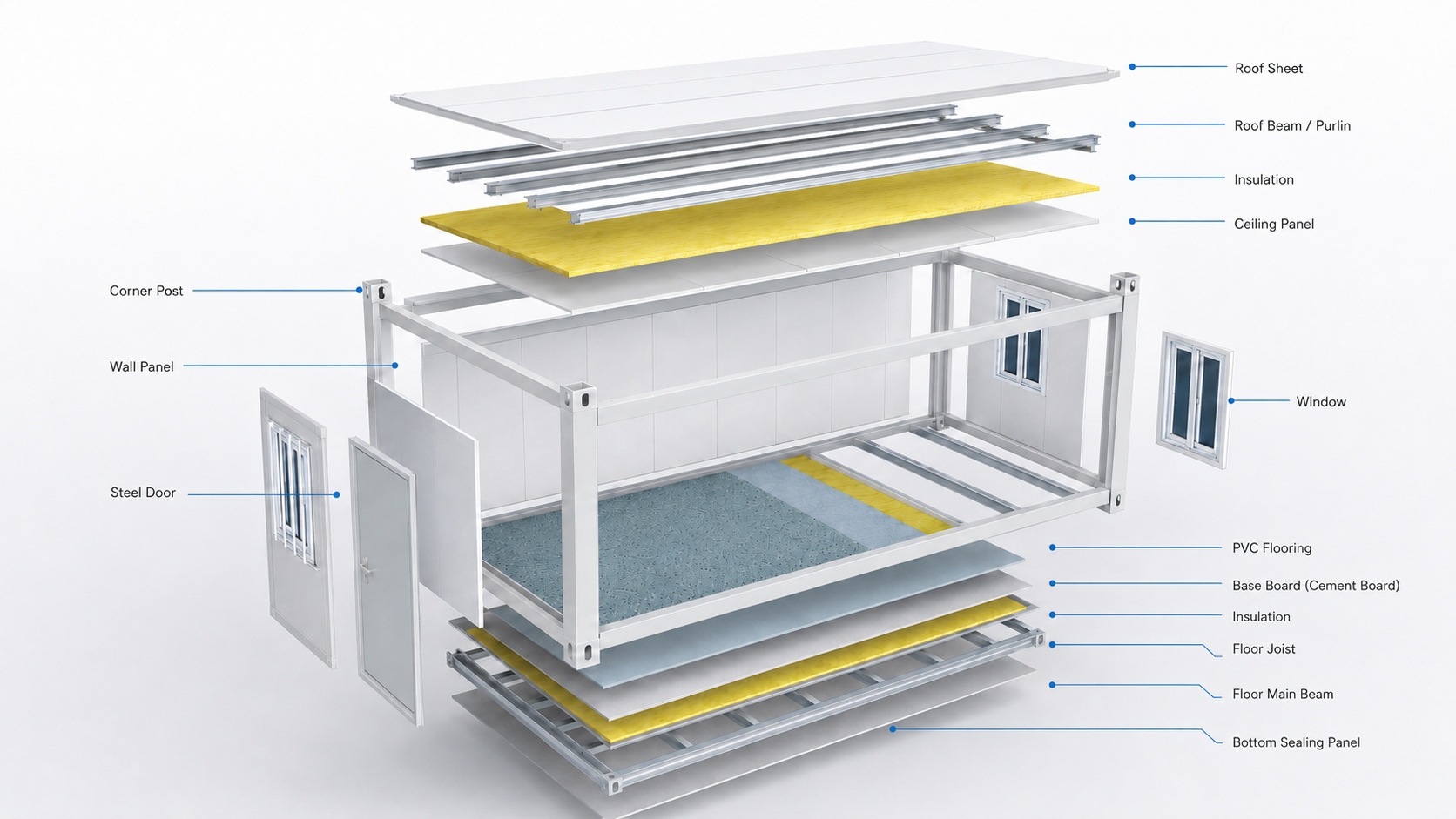
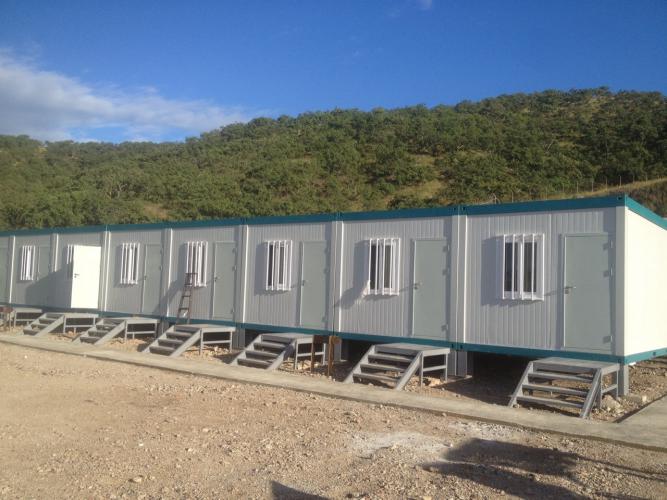
Prefabricated container houses are factory‑made modular buildings assembled on site from standardized steel frames, insulated wall and roof panels, doors, windows, and integrated electrical and lighting systems. They are engineered for repeated transportation, quick installation, and safe use as living or working spaces in a wide range of climates, from tropical coasts to freezing plateaus.
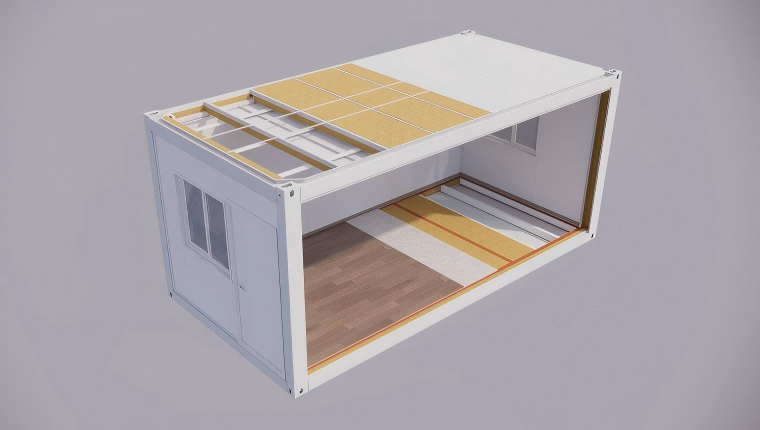
Compared with ordinary shipping containers that are only adapted for storage, these units are designed as building products with clear indicators such as design service life, structural loads, fire performance, and thermal insulation levels. Each module can work as a stand‑alone room or be combined horizontally and vertically to form multi‑storey dormitories, offices, canteens, clinics, and complete engineering camps.
In the broader prefab world, buyers often see several related terms. Prefab house usually refers to any factory‑produced building, including light‑steel, wood, and panelized systems, while modular house describes multi‑module buildings assembled from volumetric units. Container houses sit within this group as box‑type modules optimized for rapid deployment, standardization, and relocation on international projects.

The key value of prefabricated container houses is that most work moves from the job site into a controlled factory environment. This shift reduces on‑site labor, shortens project schedules, and improves quality consistency, which is vital for EPC contractors, mining operators, oil and gas projects, and government programs.
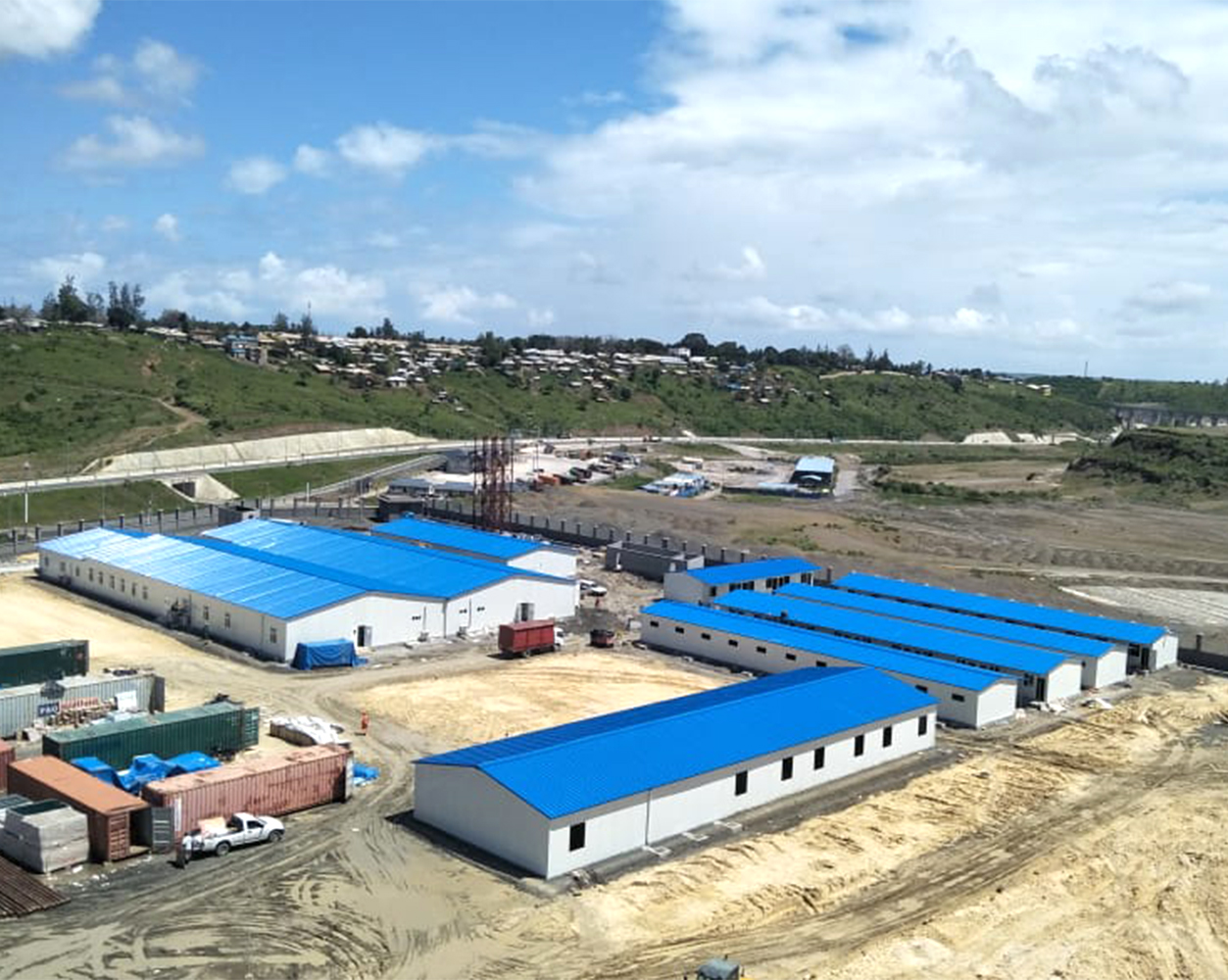
In production, structural members, sandwich panels, doors, windows, and electrical components are manufactured and pre‑assembled on standardized lines under documented quality procedures. When materials arrive on site, the remaining tasks mainly involve foundation preparation, unloading, structural connections, and interior commissioning, so large camps can be completed in weeks instead of months. This accelerated delivery helps owners start production earlier and reduce indirect costs such as machinery idle time and temporary rentals.
Structural safety is supported by galvanized or coated steel members designed to meet specified wind, snow, seismic, and floor live loads according to relevant standards. Technical manuals define design life targets and detailed requirements for anti‑corrosion coatings, fastener grades, welding quality, and inspection steps. Many systems are backed by third‑party test reports and certifications such as ISO management systems and CE marks, giving international buyers additional confidence when working under strict regulatory or tendering environments.
Comfort and energy performance are addressed through the envelope design. Container houses use composite insulation panels with steel facings and rock‑wool or similar cores, with different thicknesses and densities selected to reach the required U‑values for walls, roofs, and sometimes floors. By tuning panel thickness and glass specifications, suppliers can match climate zones from hot deserts to extreme cold regions, while also controlling noise and condensation.
Flexibility is another strong point. Each container house is a standardized module that can be connected side‑by‑side, end‑to‑end, and stacked into several storeys to form corridors, stair towers, offices, dormitory blocks, canteens, and recreation spaces. As project needs change, camps can be expanded, rearranged, or partially demobilized, so the same assets can serve several project phases or even different sites over many years.
Global engineering and energy projects often take place in the most challenging locations, so one generic solution is not enough. Experienced manufacturers like CDPH have developed dedicated container house series for extreme cold, high plateaus, deserts, Gobi regions, and other demanding conditions.
Cold‑resistant container houses are tailored for regions where winter temperatures may drop to −40°C or even −50°C. Their technical descriptions provide detailed tables listing recommended wall and roof insulation configurations, including rock‑wool density, thickness options, and corresponding U‑values for different design temperature bands such as −20 to −30°C, −30 to −40°C, and −40 to −50°C. Combined with Low‑E double‑glazed windows and careful treatment of thermal bridges, these measures help maintain interior comfort and reduce heating energy use in oilfields, mining camps, and power projects in very cold regions.
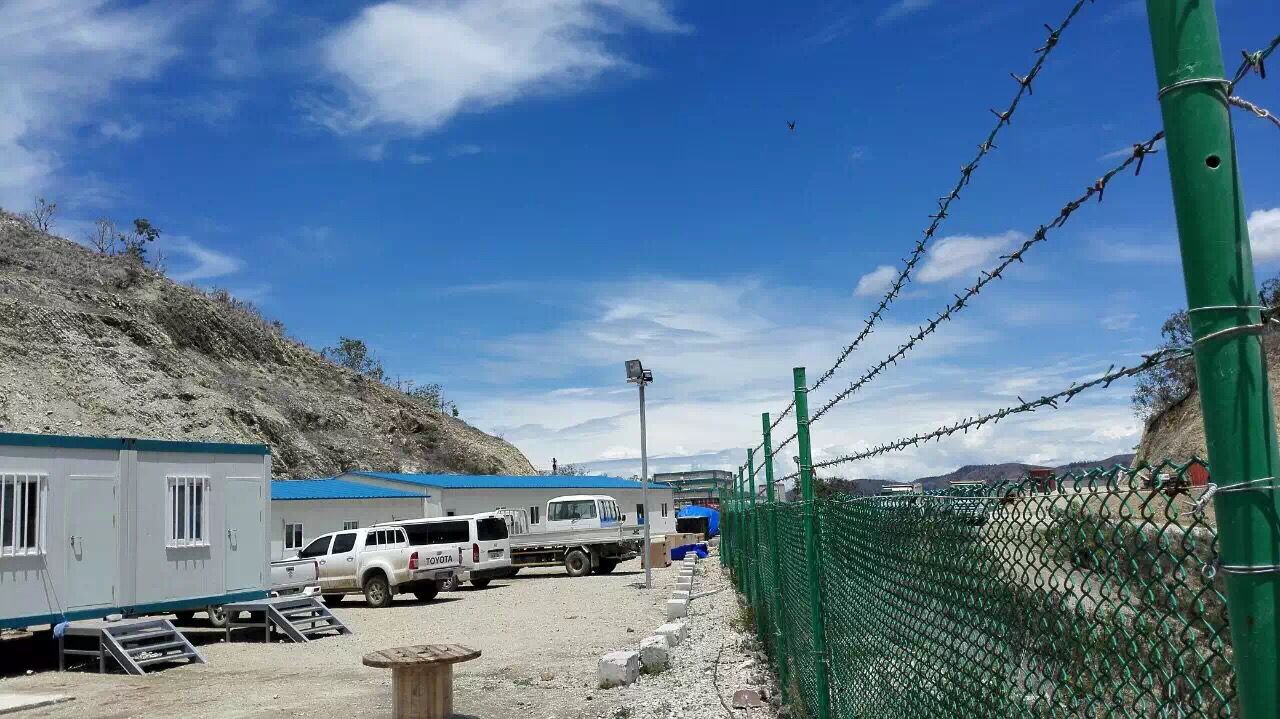
For high‑altitude plateaus, container houses are adapted to large day‑night temperature differences, strong ultraviolet radiation, and potentially higher wind speeds. In Gobi and desert environments, design emphasizes sand‑proofing, sun shading, and natural or mechanical ventilation while preserving structural stability and envelope performance. CDPH’s regional product families include plateau container houses, Gobi container houses, and desert container houses, each with targeted performance parameters and configuration suggestions for the relevant climate.
Military, emergency, and disaster‑relief fields also benefit from specialized modular houses that can be deployed quickly, moved easily, and configured as command centers, medical stations, or temporary shelters. These solutions leverage the same container‑based technology but emphasize rapid set‑up and robust operation under crisis conditions.
Because prefabricated container houses are long‑term assets rather than disposable shelters, buyers should treat technical specifications as central decision criteria.
On the structural side, critical indicators include design service life, reference design codes, basic wind speed or pressure, roof snow load, seismic performance level, and floor live load capacity. Product manuals from CDPH and similar suppliers list these values, along with details of steel grades, section sizes for columns and beams, and thicknesses for purlins and floor beams. Reviewing these figures ensures that the chosen system is suitable for local climate and regulatory requirements.
For envelope performance, buyers should check the exterior and interior steel sheet thickness, coating systems, insulation type and density, and available panel thickness options. Corresponding U‑values for walls, roofs, and floors in different climates are usually provided, together with basic information on acoustic performance. These parameters directly affect interior comfort in dormitories and offices, as well as energy consumption for heating or cooling.
Fire safety is another essential dimension. High‑quality container house systems use rock‑wool sandwich panels and other components that meet defined fire resistance ratings and relevant building codes. Suppliers such as CDPH operate under ISO9001 quality management and can present third‑party certifications and test reports, including CE marks and testing by organizations like INTERTEK. For public buildings and large industrial projects, these documents are often mandatory in pre‑qualification and final acceptance.
On the production and quality‑control side, leading manufacturers implement 5S management and standardized inspection procedures for raw materials, in‑process work, and finished products. Sampling and acceptance follow recognized standards such as GB/T 2828.1, reducing variability between batches and ensuring that random modules meet structural, fire, and insulation requirements before shipment.
Prefabricated container houses typically offer better overall economics than traditional brick‑and‑mortar construction in remote, large, or time‑critical projects, but total cost still depends on configuration, logistics, and project strategy.
Core cost drivers include the module size and structural configuration, which define the amount of steel and complexity of connections. Climate requirements also play a major role, because colder or hotter environments demand thicker insulation, higher‑performance windows, and sometimes more advanced HVAC solutions. Choices around interior fit‑out—such as simple worker dormitory standards versus higher‑end office, medical, or management facilities—will further shift the budget.
Mechanical and electrical scopes must be considered as well. A basic system may include standard wiring, lighting, and sockets, whereas more advanced options can add stronger distribution systems, extra power outlets, air‑conditioning preparation, or integrated plumbing and sanitary fixtures. On top of factory costs, logistics and on‑site services such as transport from factory to port, sea freight, local delivery, cranes, and installation labor also influence the final price per square meter.
Order volume and standardization usually help optimize cost. Large, relatively uniform camps enable suppliers to streamline production and packaging, lowering unit costs, while very small or highly customized projects may see higher per‑unit pricing. In some countries and sectors, clients can choose between purchasing container houses outright or renting them, especially for temporary offices and classrooms; purchase makes sense for long‑term or multi‑project use, whereas rental can ease cash‑flow pressure for short‑term deployments.
To make a rational decision, many buyers compare container houses with other prefab systems such as light‑steel houses, steel structure buildings, and mobile office trailers.
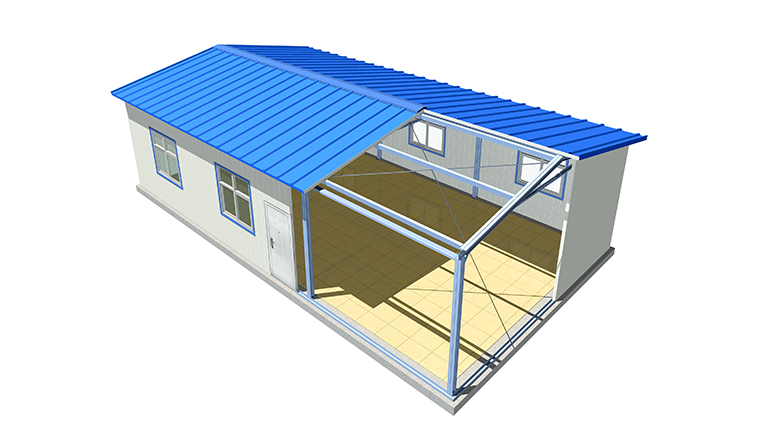
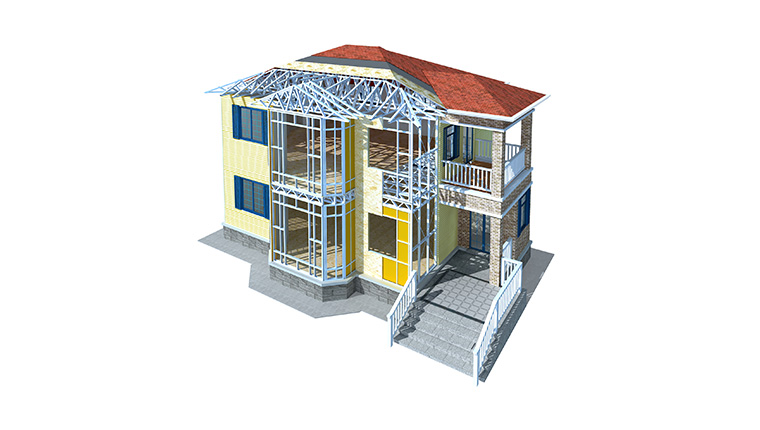
Light‑steel prefab houses often allow more freedom in roof shapes and façades and can better match local residential aesthetics, but they typically require more panel‑by‑panel assembly on site. Container houses, by contrast, are volumetric modules with much of the structure and fit‑out completed in the factory, resulting in faster on‑site work and simpler relocation if a camp needs to be moved.
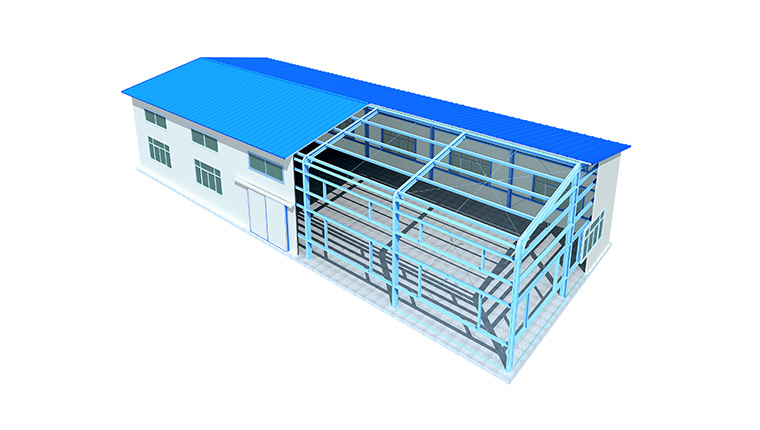
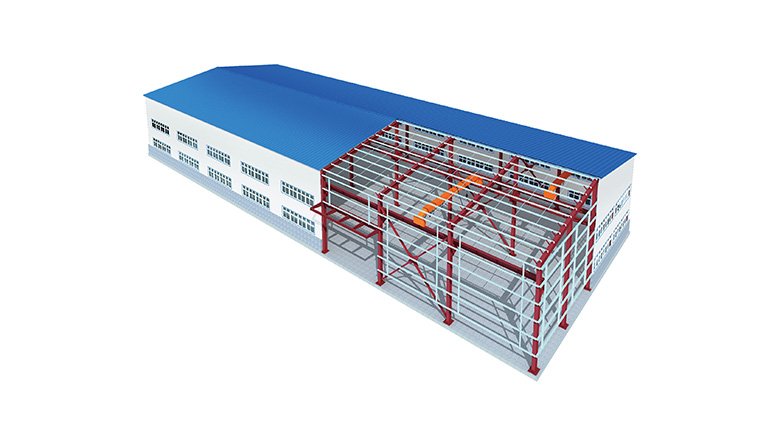
Steel structure buildings excel in large‑span industrial functions such as workshops, warehouses, hangars, or power‑plant buildings. Container houses, however, are better suited to small‑span functional spaces like bedrooms, offices, small clinics, and control rooms. Many projects combine both: container house camps for people and administration, supported by steel structure halls for production or storage.
Compared with individual mobile office trailers, container house systems are more scalable. They can form multi‑storey complexes with integrated corridors, staircases, and shared facilities such as canteens, kitchens, and recreation rooms. This makes them especially attractive for integrated engineering camps, remote bases, and large construction sites where hundreds or thousands of people must live and work comfortably for several years.
For international projects, selecting the right supplier is just as critical as selecting the right technical solution. A strong partner reduces risk in design, manufacturing, logistics, installation, and after‑sales service.
Experience and project track record are good starting points. Companies like CDPH have been engaged in modular housing and engineering camps for many years, with large production capacity and deliveries to numerous countries and climate zones. Participation in major oil and gas, power, mining, and infrastructure projects shows that a supplier understands complex EPC requirements, international standards, and owner expectations.
A complete product and service system is another important indicator. Beyond standard container houses, CDPH provides specialized cold‑resistant, plateau, Gobi, and desert series, as well as complementary systems like light‑steel villas and steel structure buildings. The company also offers camp planning, detailed design, logistics coordination, on‑site installation guidance, and after‑sales support, forming a true one‑stop solution for engineering camps.
Documentation and quality assurance should not be overlooked. Buyers should check that the supplier can provide detailed technical manuals, drawings, quality certificates, ISO and CE documents, and third‑party testing reports where applicable. These materials support tendering and regulatory approval and also help local construction teams install and maintain the buildings correctly.
Understanding the typical project process for prefabricated container houses helps new buyers communicate more effectively and avoid delays.
The process usually starts with an initial inquiry, where the client shares project location, climate conditions, intended building functions, required capacity, expected service life, and schedule. Based on this information, the supplier recommends suitable container house types—such as standard, cold‑resistant, or regional series—and prepares a preliminary master plan and room layouts.
Next, a technical and commercial proposal is prepared, defining the scope of supply, main technical parameters, delivery schedule, and pricing. After technical clarification and contract signing, the factory organizes production, carries out quality inspections according to defined standards, and prepares packing lists and shipping documents. Materials are loaded into containers or onto trailers and transported to the destination port and then to the project site.
On site, foundations are constructed according to design, materials are unloaded and checked, structures are assembled, modules are connected, and internal systems are installed and tested. The supplier may send supervisors or provide detailed installation guides to support local teams. After inspection and commissioning, the camp or building is handed over for occupation and use.
During operation, basic maintenance such as cleaning, paint touch‑ups, panel repairs, and periodic inspections keeps the buildings in good condition and helps them reach their designed service life. When the original project ends, many container houses can be dismantled and moved to a new site, allowing investors to reuse assets across several projects and significantly improve lifecycle returns.
For developers, EPC contractors, and public agencies seeking fast, durable, and flexible solutions, prefabricated container houses provide a proven way to build modern modular camps and buildings with controlled quality, predictable schedules, and strong adaptability to global climates.
Scan the QR code to follow