Introduction
Military operations worldwide demand housing solutions that go far beyond standard construction. Whether supporting peacekeeping missions in conflict zones, managing humanitarian relief efforts, or establishing forward operating bases in remote locations, temporary military housing must balance speed of deployment, structural durability, environmental adaptation, and cost-effectiveness. Modern military organizations increasingly recognize that modular and container-based housing systems represent a paradigm shift in how armed forces and defense contractors establish temporary camps and operational bases globally.
The evolution of temporary military housing reflects broader trends in military logistics and engineering innovation. Rather than relying exclusively on traditional tent-based encampments or hastily constructed permanent structures, defense forces now deploy sophisticated prefabricated modular systems that arrive at remote locations ready for immediate installation. These solutions have proven invaluable in peacekeeping operations, disaster response coordination, and extended military deployments where personnel comfort directly impacts operational effectiveness and mission success.
The Strategic Importance of Temporary Military Housing
Establishing secure, comfortable accommodation for military personnel fundamentally shapes mission success. Personnel stationed in remote or hostile environments require functional living spaces that protect them from extreme weather, provide sanitation facilities, and maintain morale through dignified living conditions. Substandard housing contributes to health issues, reduced operational readiness, and increased personnel fatigue—factors that directly compromise mission effectiveness.
Temporary military housing serves multiple strategic purposes. First, it enables rapid force deployment without requiring extensive site preparation or permanent infrastructure investment. Second, it provides flexibility as mission parameters change, allowing military organizations to scale operations up or down while maintaining structural integrity. Third, it facilitates logistics efficiency by concentrating essential services—medical facilities, dining areas, communication centers—in integrated camp designs. Finally, it demonstrates humanitarian commitment by providing dignified housing during peacekeeping or stabilization operations, which enhances international cooperation and local community relations.
The geopolitical landscape increasingly demands deployment capabilities. Peacekeeping operations in Africa, humanitarian missions across Asia, and training exercises on multiple continents require housing systems that can be transported via ocean container, air cargo, or overland routes, then rapidly assembled by small teams without heavy equipment or specialized construction expertise. Traditional construction methods simply cannot meet these logistical and timeline requirements.
Core Technologies in Modern Temporary Military Housing
Modern temporary military housing relies on several engineered systems, each designed for specific operational contexts.
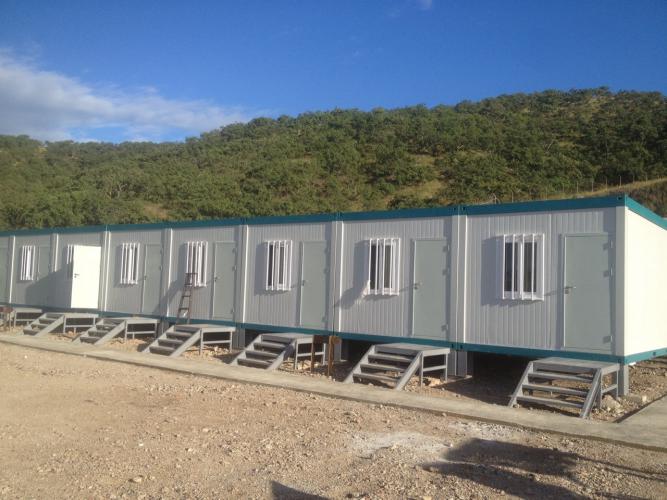
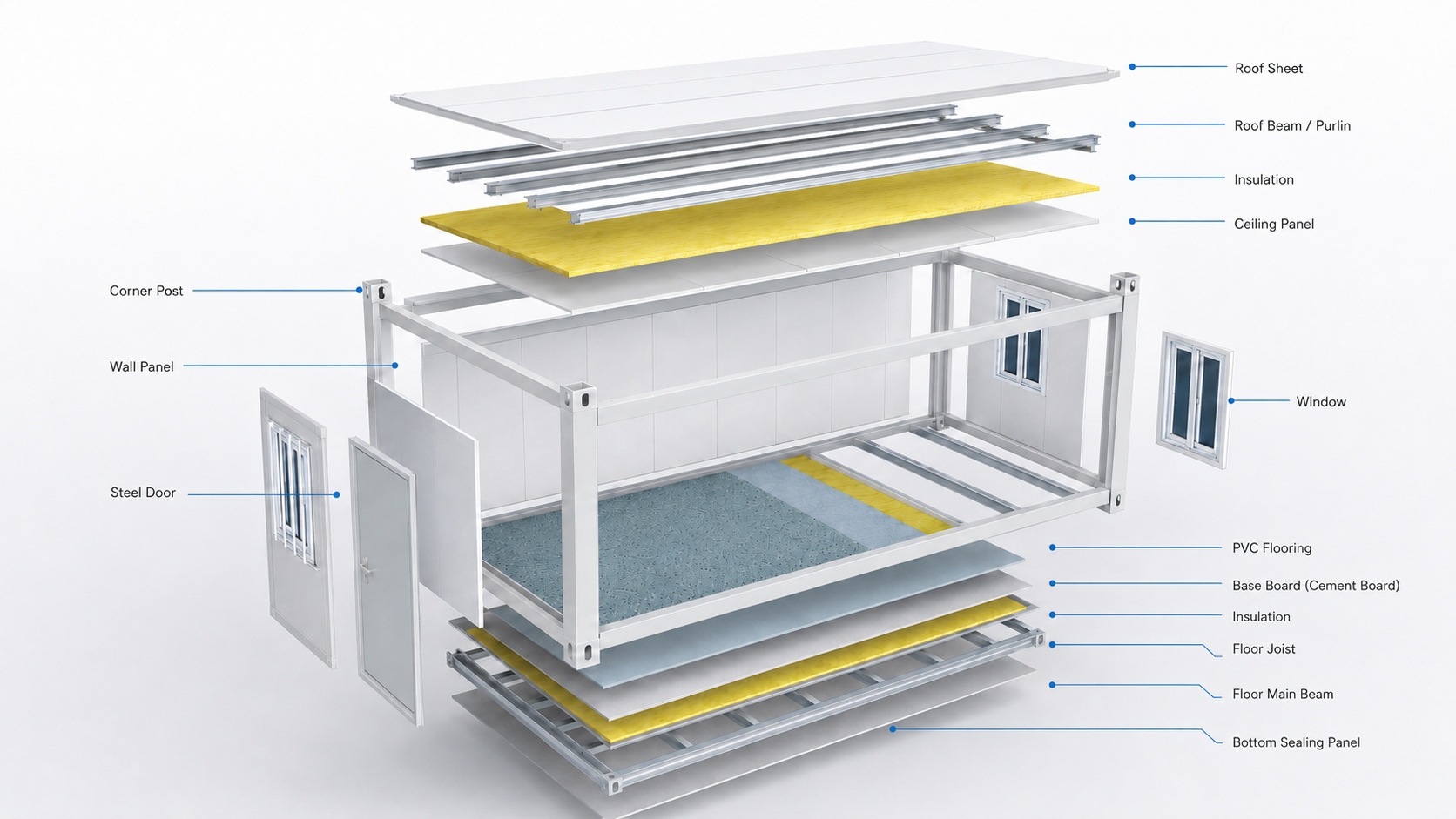
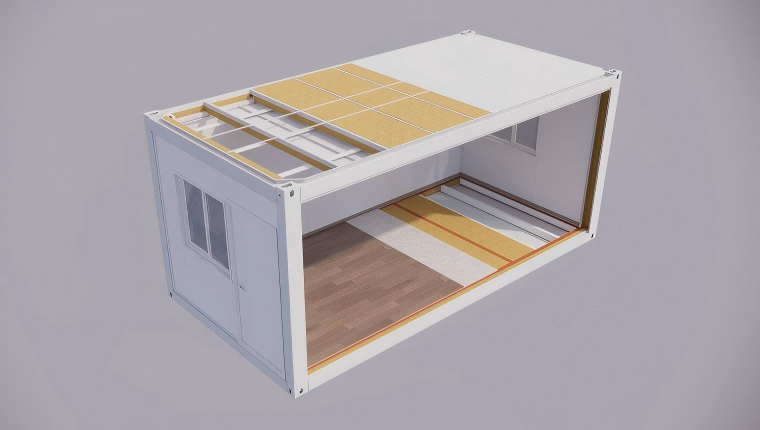
Container House Systems represent the most compact and efficiently transported option. These modular units use standardized shipping containers (typically 20 or 40 feet) as structural frames, with interior partitioning, insulation, and utility systems factory-installed. Container houses measuring 6,055 millimeters in length by 2,990 millimeters in width and 2,896 millimeters in height offer interior net dimensions of 5,845 by 2,780 by 2,500 millimeters—sufficient for dormitory rooms, office spaces, or support facilities. Multiple units stack vertically up to three layers, enabling maximum space utilization on constrained military sites. The structural system employs hot-dip galvanized steel profiles, 100-millimeter glass fiber wool insulation in roof and floor assemblies, and 75-millimeter rock wool composite wall panels, all contributing to thermal protection and corrosion resistance critical in challenging environments.
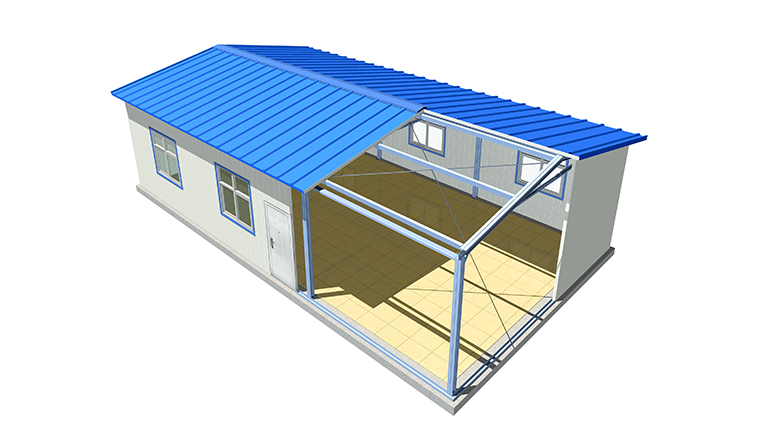
Prefabricated Building Systems (ZA Type Houses) represent a more advanced technology that develops layouts based on modular design principles while offering superior environmental adaptation. These structures employ cold-formed hot-dip galvanized steel frameworks—technology that originated in military engineering—combined with flexible wall and roof configurations. The structural design withstands Category 11 winds, with upgraded systems handling Category 17 hurricane conditions after specialized treatment. The sealing performance derives from structural frames positioned internally, creating seamless connections with external maintenance plates. Because assembly utilizes fully bolted connections rather than site welding, installation timelines compress significantly while construction quality improves. The technology demonstrates exceptional corrosion resistance through galvanized steel treatment, critical for coastal installations or humid environments where military operations frequently occur.
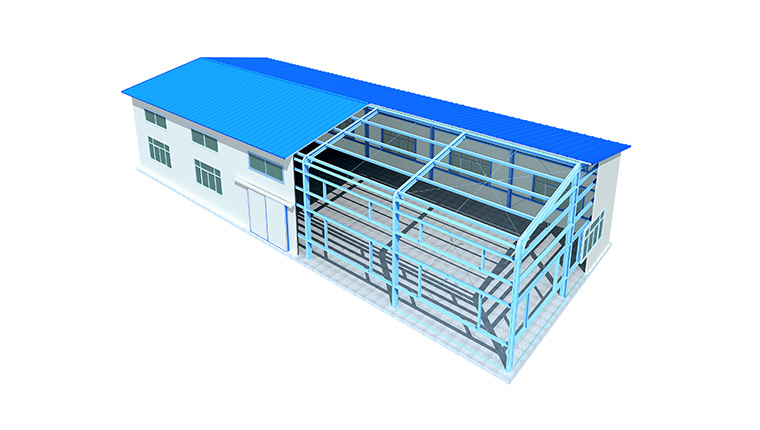
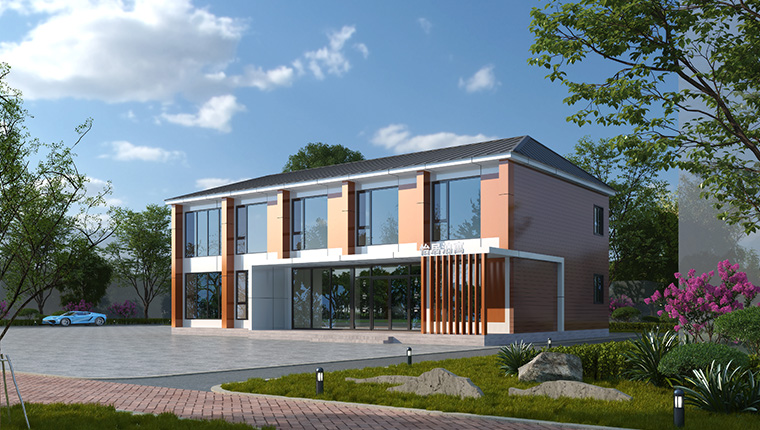
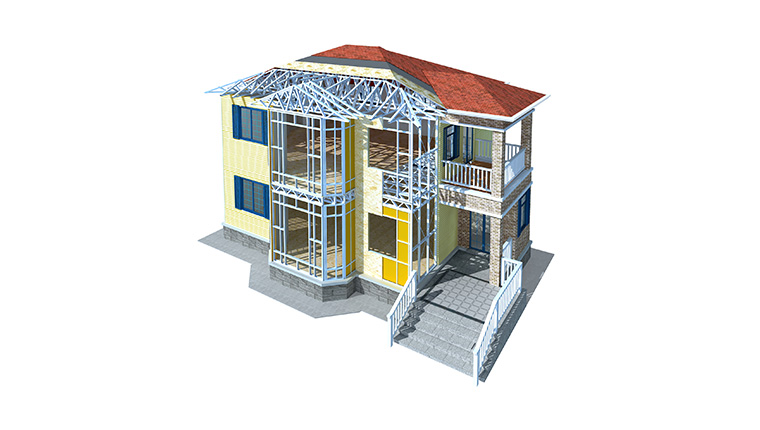
Light Steel Villa Structures represent semi-permanent solutions for extended deployments. Designed with service lives exceeding 25 years, these structures provide accommodation comparable to permanent buildings, suitable for command staff, medical facilities, or guest accommodations at military establishments. The construction methodology employs light steel frame systems that achieve large spans without traditional heavy H-shaped steel components, reducing transportation requirements while maintaining structural safety.
Technical Specifications for Military Applications
Military housing specifications reflect rigorous performance demands. Standard container-based units incorporate the following specifications: roof live loads of 0.5 kiloNewtons per square meter, floor live loads of 2.0 kiloNewtons per square meter, and wind load resistance of 0.5 kiloNewtons per square meter—parameters designed for populated military installations requiring equipment movement and resupply operations. Thermal transmission coefficients measure 0.64 watts per meter-Kelvin through roofing, 0.46 watts per meter-Kelvin through floors, and 0.47 watts per meter-Kelvin through wall assemblies, ensuring personnel comfort across temperature extremes from tropical deployments to cold-weather operations.
The modular design concept enables functional flexibility essential for military operations. Standard room configurations include dormitory modules accommodating 1-4 personnel, office spaces, medical treatment rooms, dining facilities, storage areas, and hygiene buildings. Each module features pre-installed electrical circuits, water supply connections, and drainage systems, allowing rapid integration into integrated camp infrastructure. Interior finishing materials include cement fiberboard flooring with rubber-plastic surface treatments, color steel suspended ceilings, and fully equipped bathroom modules with integrated shower systems—reducing installation labor and accelerating operational readiness.
Real-World Military Deployment Applications
Actual military operations demonstrate the effectiveness of modern temporary housing solutions. A notable peacekeeping mission deployment in Libya incorporated integrated housing systems for personnel support during stabilization operations. Similarly, military assistance programs have utilized modular housing to provide accommodation for deployed forces in remote locations, where traditional construction would require months of preparation and create unsustainable logistical burdens.
One documented military camp project in Kazakhstan illustrates climate adaptation capabilities. During the Astana Light Railway project, which required accommodation for 3,000 workers in extreme cold conditions with winter temperatures reaching minus 52 degrees Celsius and snow cover lasting 130-140 days annually, specialized housing units incorporated 150-millimeter rock wool color steel composite panels—nearly double standard insulation—combined with triple-layer glass windows. The project successfully completed in harsh winter conditions, delivering functional military-grade accommodation despite unprecedented environmental challenges. This demonstrates that modern modular housing systems can operate effectively across the full spectrum of global military deployments.
Military logistics applications have expanded beyond personnel accommodation. The same technologies support mobile command centers, secure medical facilities, equipment storage, and dining facilities—all integrated within unified camp designs that maintain operational efficiency, security protocols, and personnel welfare simultaneously.
Advantages of Modular and Container-Based Systems
Temporary military housing built on modular principles offers decisive advantages over traditional approaches. First, transportation efficiency dramatically reduces logistics burdens. Standard container houses can be packaged five units per 20-foot shipping container, compared to traditional construction materials that would require multiple shipments. The complete housing arrives pre-furnished with integrated beds, desks, chairs, and bathroom fixtures—eliminating secondary procurement requirements and accelerating operational readiness.
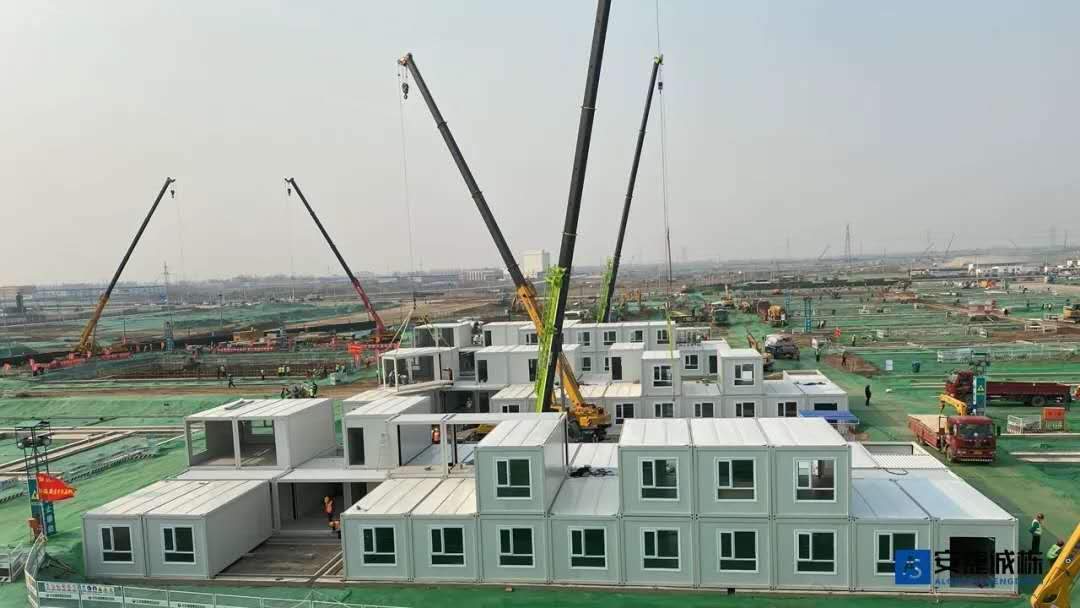
Second, installation speed proves critical in military contexts. Fully bolted assembly systems eliminate on-site welding, reducing construction time from weeks to days. Field teams without specialized construction expertise can complete installation, allowing military personnel to focus on operational priorities. The modular design permits phased expansion—starting with core personnel accommodation and progressively adding support facilities as missions evolve.
Third, structural reliability meets military standards for personnel protection. Hot-dip galvanized steel construction resists corrosion and environmental degradation across diverse climates. Bolted assembly ensures consistent structural performance regardless of assembly location or installer experience. The structural design supports stacking, allowing vertical expansion in constrained military sites while maximizing usable space.
Fourth, environmental performance extends operational effectiveness. Integrated insulation systems maintain interior temperatures across climate extremes. Waterproofing technologies employing patented structural designs eliminate persistent problems with traditional construction, where repeated assembly and disassembly cycles degrade seal integrity. Superior sealing performance prevents moisture infiltration that damages equipment and compromises hygiene—critical health factors in military contexts.
Fifth, cost-effectiveness over operational lifecycles significantly improves military budget efficiency. While initial unit costs may exceed traditional construction, the combination of transportation efficiency, rapid installation, environmental durability, and reusability across multiple deployments generates superior total-cost-of-ownership metrics. One deployment cycle can be recovered within a single military operation.
Integration with Military Support Infrastructure
Temporary military housing cannot function in isolation. Modern military camps integrate housing systems with comprehensive infrastructure supporting operational effectiveness. Electrical systems distribute power from generators through formalized distribution networks rather than improvised cabling. Water supply systems employ elevated storage tanks with pressure regulation, ensuring consistent availability across changing demand. Drainage infrastructure employs biological treatment systems that prevent environmental contamination while recycling water for non-potable applications—reducing freshwater requirements in austere locations.
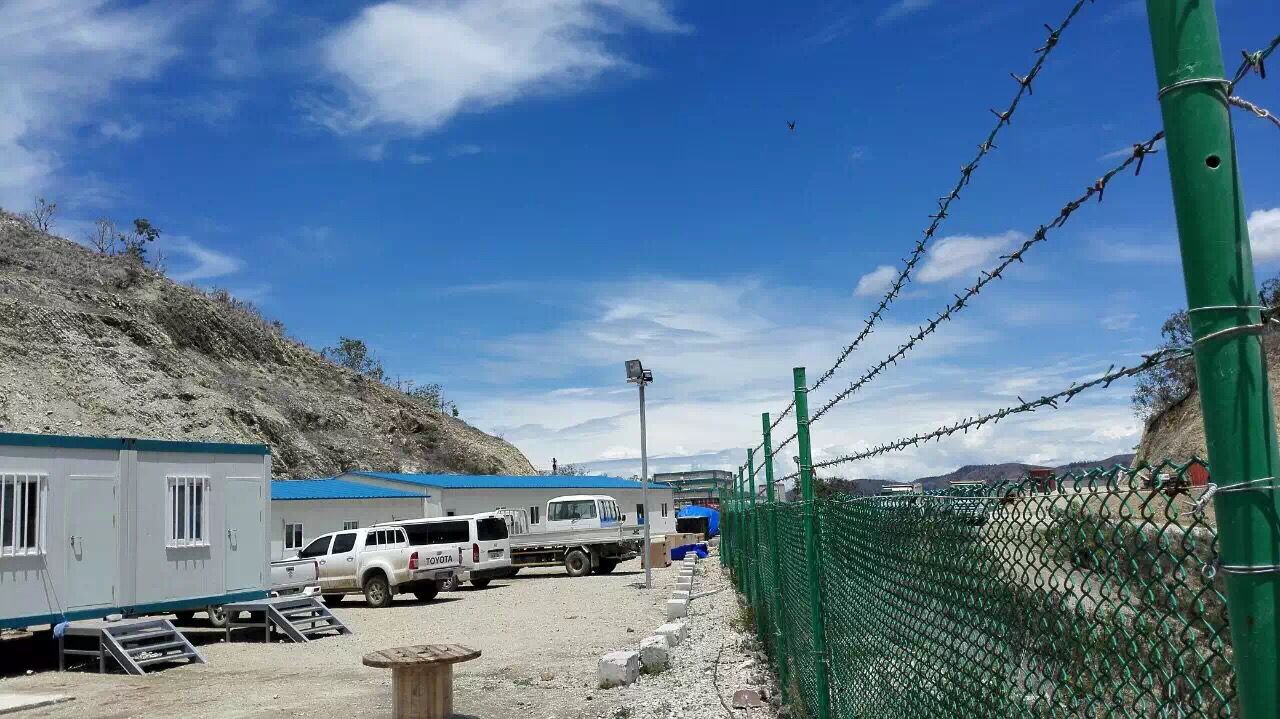
Sanitation facilities employ integrated bathroom modules that maintain hygiene standards critical for personnel health. Security systems incorporate perimeter fencing, access control gates, surveillance monitoring, and guard accommodations. Fire protection systems employ wireless alarm technology with automatic sprinkler activation. Communications infrastructure supports secure military networks independent of local telecommunications. Medical facilities integrate diagnostic and treatment capabilities within modular structures. These integrated systems transform isolated container assemblies into fully functional military establishments.
Environmental and Sustainability Considerations
Modern military housing addresses environmental imperatives increasingly relevant to defense operations. The complete prefabrication at factory facilities enables quality control and waste minimization impossible in field construction. Modular systems designed for multiple assembly and disassembly cycles reduce consumption of construction materials across repeated deployments. Integrated water treatment systems prevent contamination of local water resources. Recycled materials in insulation systems reduce resource extraction pressures. Solar power integration reduces diesel fuel consumption in remote locations. The circular design enabling complete reuse across multiple deployments aligns with defense sustainability objectives while reducing operational costs.
Environmental adaptation represents another dimension of sustainable deployment. Designs can be customized for specific climates—enhanced insulation for Arctic operations, passive cooling and ventilation for tropical deployments, elevated structures for flood-prone regions. This climate-specific customization prevents environmental damage that would result from inadequate infrastructure designed without consideration for local conditions.
Comparative Analysis: Temporary Military Housing Options
| Feature | Container Houses | ZA Type Prefab | Light Steel Villas | Traditional Construction |
| Deployment Time | 3-5 days | 5-10 days | 10-20 days | 60-120+ days |
| Transportation Efficiency | 5 units per 20ft container | 2-3 units per container | Requires specialized transport | Extensive site materials |
| Structural Durability | 15-20 years | 20+ years | 25+ years | Variable |
| Wind Resistance | Category 11 standard | Category 17 enhanced | Category 17+ | Variable |
| Installation Labor | Minimal expertise required | Skilled technicians | Professional crews | Professional construction |
| Cost per Unit | $15,000-25,000 | $20,000-35,000 | $35,000-60,000 | $25,000-50,000 (amortized) |
| Reusability | Excellent (10+ deployments) | Excellent (8+ deployments) | Good (3-5 deployments) | Poor (single site only) |
| Climate Adaptation | Good (customizable panels) | Excellent (modular design) | Excellent (engineered design) | Fair (standard construction) |
Future Evolution of Military Housing Technology
Military housing technology continues advancing. Integrated smart building systems enable remote monitoring of structural integrity, environmental conditions, and personnel security. Energy-efficient LED lighting systems reduce power consumption by 80% compared to traditional lighting. Modular electrical systems support rapid reconfiguration as mission requirements evolve. Prefabrication technologies increasingly incorporate digital manufacturing, improving precision and reducing production timelines.
Advanced material systems promise enhanced performance. Carbon fiber composites reduce structural weight while maintaining strength, easing transportation. Phase-change materials in insulation systems improve thermal stability. Self-healing concrete and corrosion-resistant coatings extend service life. Modular plumbing and electrical systems employ color-coded connections reducing installation errors.
The trajectory of military housing innovation emphasizes mission readiness, personnel welfare, and operational efficiency. As geopolitical complexity demands increasingly rapid force projection and extended stabilization operations, housing solutions that balance speed, durability, and cost-effectiveness become strategically significant force multipliers.
Conclusion
Temporary military housing represents a matured engineering discipline balancing rapid deployment requirements with personnel protection, environmental durability, and cost-effectiveness. Modern modular and container-based systems derived from decades of military camp experience now provide capabilities that traditional construction cannot match. From peacekeeping operations in conflict zones to humanitarian relief coordination and extended military training exercises, these solutions enable defense organizations to maintain personnel welfare while focusing resources on operational objectives.
The technology landscape demonstrates clear advantages: container houses achieving deployment readiness in days, prefabricated systems offering enhanced environmental performance, and light steel structures providing semi-permanent accommodation for extended operations. Integration with comprehensive camp infrastructure creates functional military establishments from modular components. Environmental sustainability increasingly drives design innovation while reducing operational costs.
Military organizations worldwide continue recognizing that temporary housing quality directly impacts operational effectiveness, personnel morale, and mission success. As geopolitical demands increase, housing systems offering rapid deployment, environmental adaptation, reusability, and cost-effectiveness provide strategic advantages that justify continued investment and technological advancement. The evolution from improvised field camps to engineered military housing represents a fundamental shift in how defense forces project power, sustain operations, and demonstrate commitment to personnel welfare across the full spectrum of global military engagement.
For military planners evaluating temporary housing solutions, modern modular systems offer proven capabilities developed through thousands of deployments across diverse climates and operational contexts. The combination of engineering sophistication, field-tested reliability, and operational flexibility positions these solutions as essential components of contemporary military logistics and personnel support infrastructure.




 More
More













![Top Advantages of Modular Construction Explained [2025]](/uploads/upload/images/20250424/0fb390068474145a09a8c0504c73b1d2.png)
 May 09, 2025