Introduction: Why EPC camps need eco friendly modular house
Engineering camps for energy, mining and infrastructure projects face increasing pressure to reduce environmental impact, shorten schedules and improve worker living conditions in remote locations. At the same time, owners and EPC contractors must respond to stricter regulations and ESG expectations across more than one hundred countries and regions. Within this context, adopting an eco friendly modular house approach in camp solutions becomes a structural way to align project delivery with sustainability and risk management goals.
Unlike traditional temporary accommodation, modular camps for large construction projects now need to perform as integrated systems rather than isolated buildings. They must combine industrialized production, fast deployment and the ability to be dismantled and reused without leaving construction waste on site. This article analyzes how eco friendly modular house concepts can be embedded into EPC camp solutions across the full lifecycle, from planning and nine-system engineering to manufacturing, installation, operation and relocation.
You can learn more about integrated camp solutions on the official site via this anchored link to Chengdong’s international modular housing: engineering camp modular solutions.
EPC perspective on modular camp delivery
Under the EPC model, a single contractor typically takes responsibility for engineering, procurement and construction of both the main facility and the supporting camp. The camp must be planned, designed, procured and delivered within the same tight schedule as the main project, often in locations with weak infrastructure and challenging climate conditions. For global ENR-listed clients, this places high expectations on quality, HSE performance and compliance with local standards.
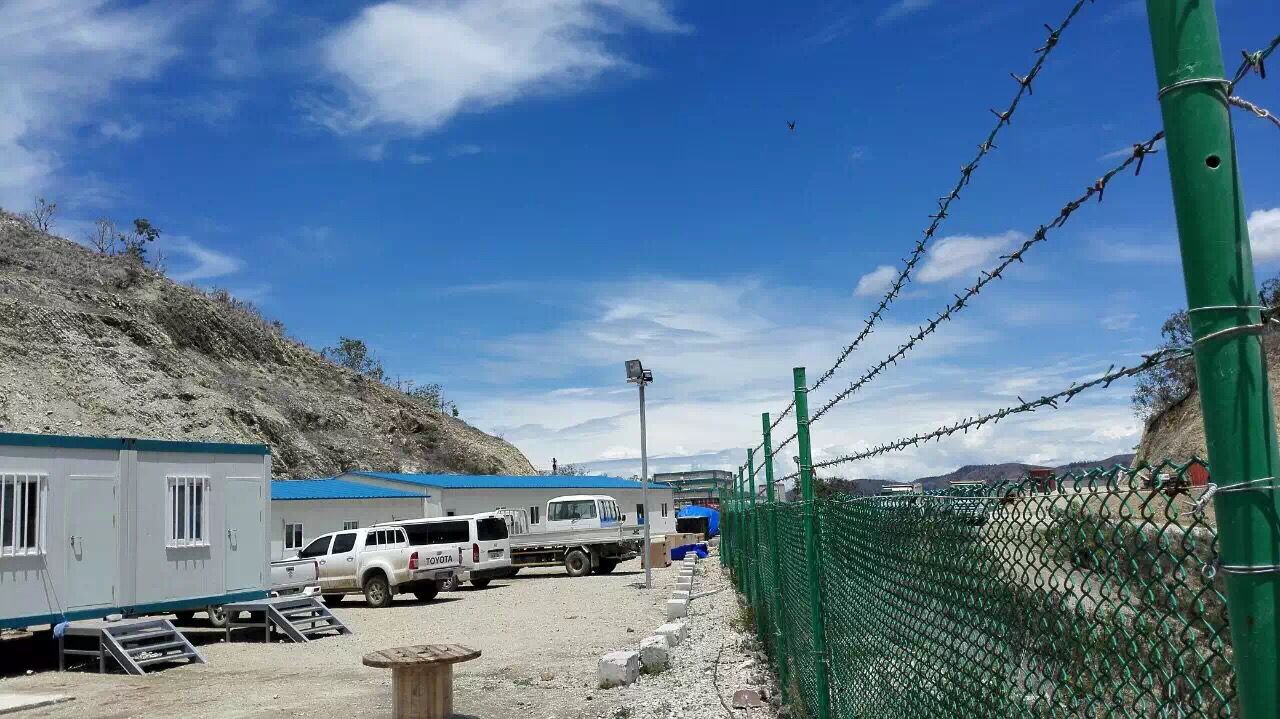
In such projects, modular housing for camps is not a marginal add-on but a key enabling infrastructure. The camp provides accommodation, catering, medical services, offices, storage and other functions that support several hundred to several thousand workers over many years. Eco friendly modular house solutions allow EPC contractors to treat the camp as a reusable asset that can be redeployed between projects, rather than a one-off cost that must be demolished at the end of each contract.
Defining eco friendly modular house in camp context
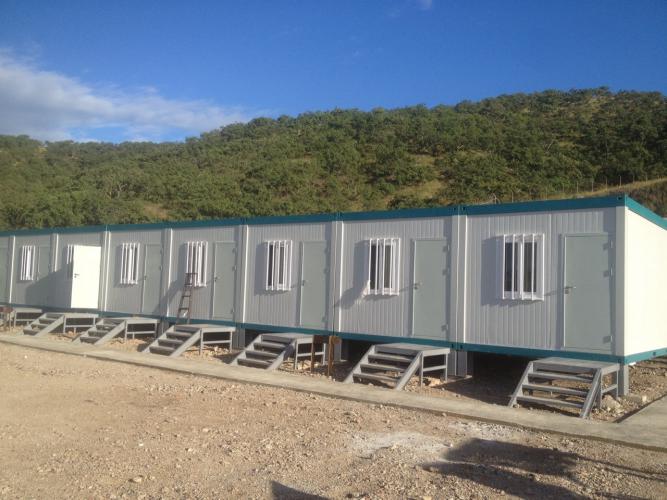
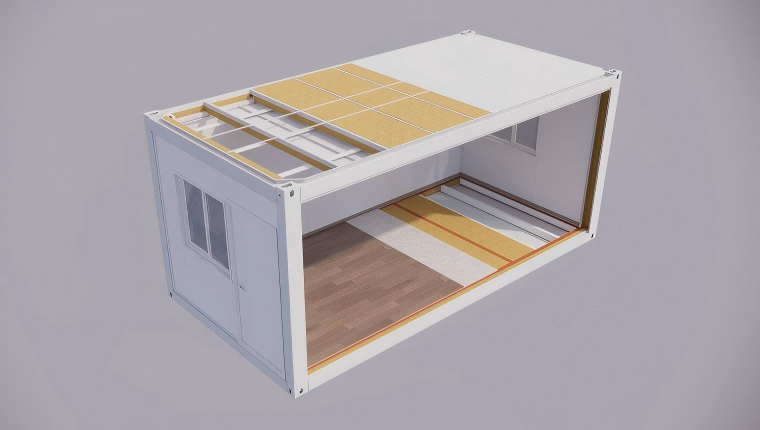
In the context of engineering camps, an eco friendly modular house can be defined along three main dimensions. First, the building is produced through industrialized factory manufacturing, with standardized floors, roofs, columns and sandwich wall panels that can be repeatedly assembled and dismantled. Second, its envelope and internal systems are designed to reduce energy and water consumption over the entire lifecycle, using insulation, efficient lighting and centralized water and wastewater treatment. Third, the modules and key equipment can be transported and reused, enabling camp relocation with minimal solid waste and ground disturbance.
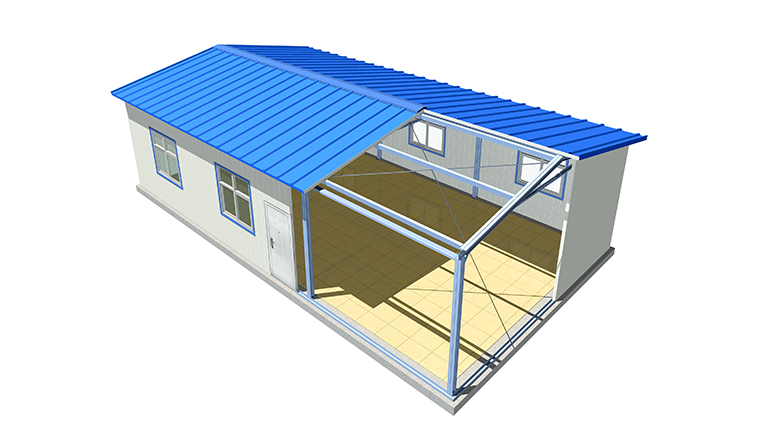
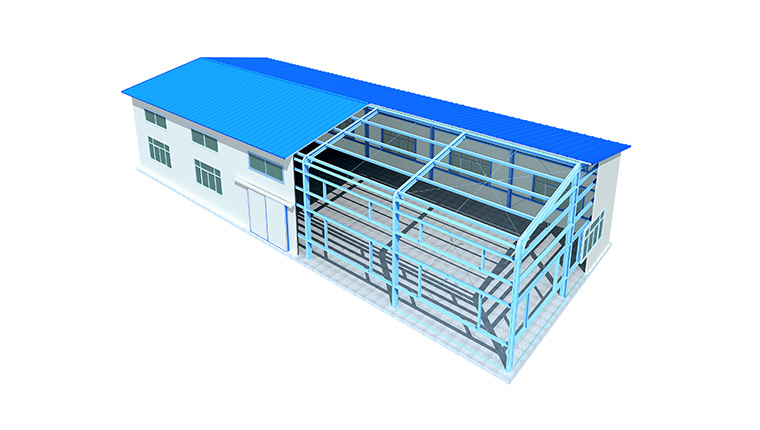
Traditional temporary buildings on project sites are often built using wet trades, with ad-hoc materials and low potential for reuse. When the project is completed, these structures are usually demolished, leaving behind foundations, debris and disturbed surfaces that require restoration. In contrast, eco friendly modular house solutions follow a design-for-disassembly approach, allowing integral transportation of modules and recovery of the original site without construction waste. This shift changes the environmental profile of camps and supports long-term asset utilization strategies for EPC contractors.
Integrating eco friendly modular house across the EPC camp lifecycle
Planning and camp master design
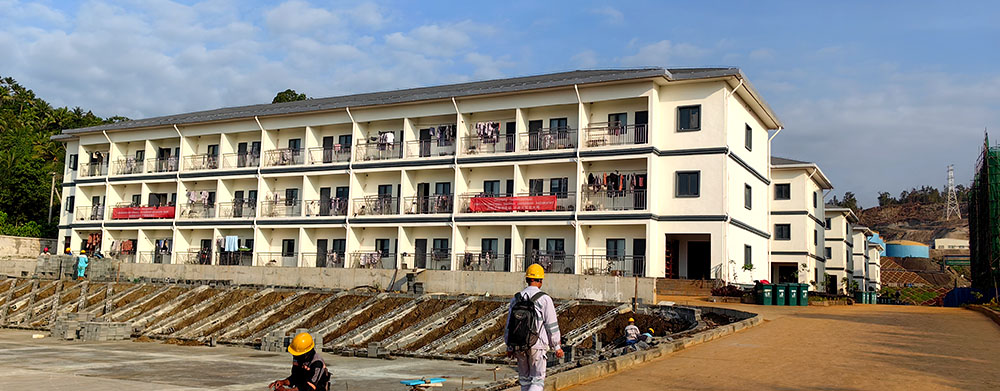
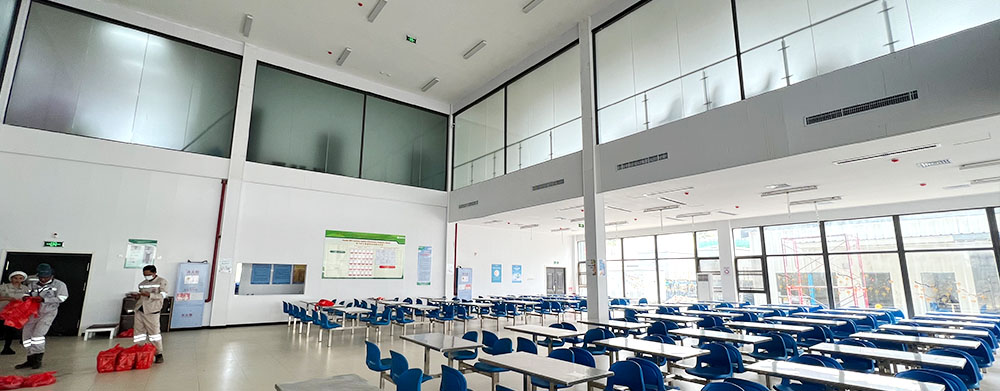
The foundation of an eco friendly modular camp is a well-considered master plan that controls land use intensity and functional zoning. For example, one reference camp layout with a total area of around 42,800 m² allocates land for double rooms, single rooms, suites, dormitories, canteen and gym, while maintaining a plot ratio of 0.38 and a greening rate of 17%. Such planning not only defines living density but also reserves space for green landscaping, outdoor sports and environmental facilities.
Early in the planning stage, designers can integrate environmental elements such as central wastewater treatment, classified waste collection points and modular unit combinations that can be removed at the end of the project. The camp master plan should also define infrastructure corridors for power, water and data, and consider prevailing winds, solar exposure and local hydrology to reduce later interventions. By doing so, eco friendly modular house clusters become part of a coordinated camp system rather than isolated containers placed on open ground.
You can reference the modular product center for typical camp building types here: modular container house products.
Nine-system engineering as the backbone of eco friendly operation
A distinctive feature of Chengdong’s camp methodology is the “nine-system” framework, which organizes all camp components into building, water and heating, power, weak current, fire-fighting, security, transport and roads, camp environment facilities and environmental protection systems. This structure helps EPC teams coordinate different disciplines and ensure that eco friendly modular houses are supported by coherent infrastructure rather than improvised utilities.
In the building system, factory-made modular houses and integral bathrooms provide the core accommodation and working spaces. The water and heating system combines water supply equipment, purification units, septic tanks and hot water solutions to ensure safe and efficient use of water. The power and lighting system uses transformers, switchgear, cables and LED ecological lights, while the environmental protection system integrates domestic waste collection and compact wastewater treatment facilities. By viewing eco friendly modular house implementation through this nine-system lens, EPC contractors can systematically address energy, water and waste performance in camp design.
Engineering design of eco friendly modular house
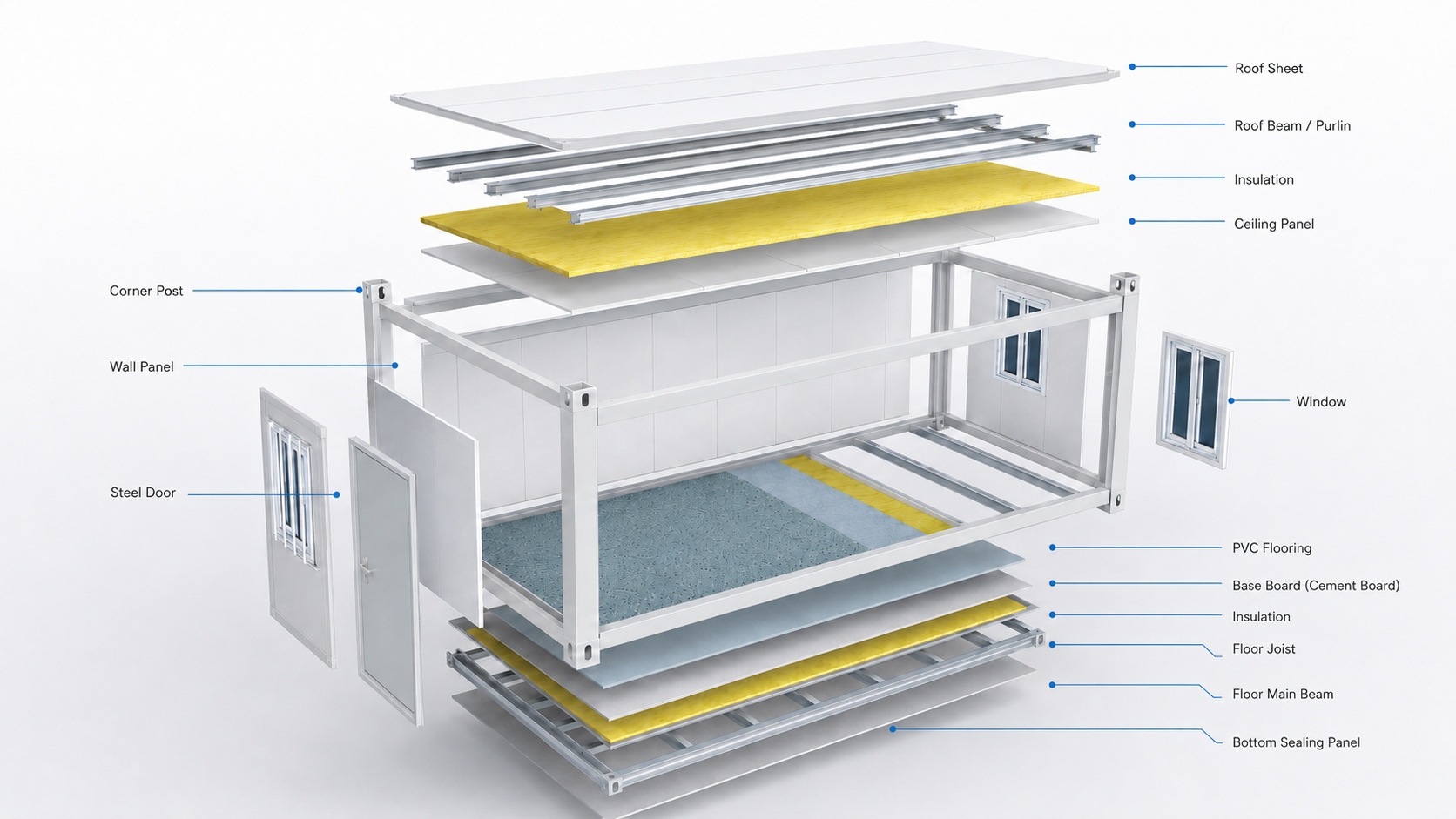
The technical configuration of modular houses plays a central role in camp sustainability performance. Structural components typically use hot-dip galvanized steel for floors, roofs and columns, with coating thicknesses around 60 μm to improve durability and reduce maintenance frequency. Wall and roof panels often employ glass wool or polyurethane sandwich panels at thicknesses from 75 mm upwards, achieving thermal transmittance values around 0.47–0.64 W/m²·K to control heat loss.
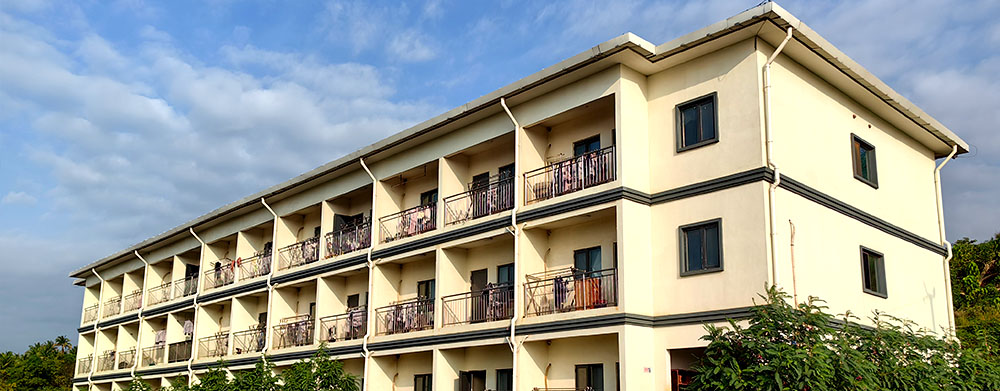
Standardized modules of approximately 20, 27, 38 and 45 feet support different camp functions, such as offices, accommodation and meeting rooms, with typical unit areas between about 14.74 m² and 41.01 m². These modules can be arranged in symmetric layouts, combined into corridors or stacked in multiple storeys, improving land use efficiency while keeping circulation rational. Through modular design, eco friendly modular house units can be assembled for one project and then reconfigured for another, reducing the need for new material consumption in future camps.
Procurement and off-site manufacturing
In an EPC environment, procurement and off-site manufacturing are critical to both schedule control and environmental performance. Standardized components such as floor systems, roof systems, columns and wall panels are produced in factories according to defined specifications, which helps improve material yield and reduces scrap compared with on-site fabrication. The use of prefabricated integral bathrooms, electrical systems and interior finishes further consolidates work into controlled environments, minimizing waste at the project site.
Camp suppliers also develop green packaging strategies, designing transport plans that reduce secondary packaging while protecting components during long-distance sea and land logistics. Cooperation with local logistics partners in target countries helps optimize routes and handling, cutting unnecessary movements and associated emissions. At the same time, compliance with quality and environmental management systems such as ISO9001 and ISO14001 and certifications like CE for steel structures and sandwich panels ensures that eco friendly modular house solutions meet international standards and regulatory expectations.
To explore more about standardized camp modules and their transport configurations, you can check this anchor: container house camp modules.
On-site installation and construction management
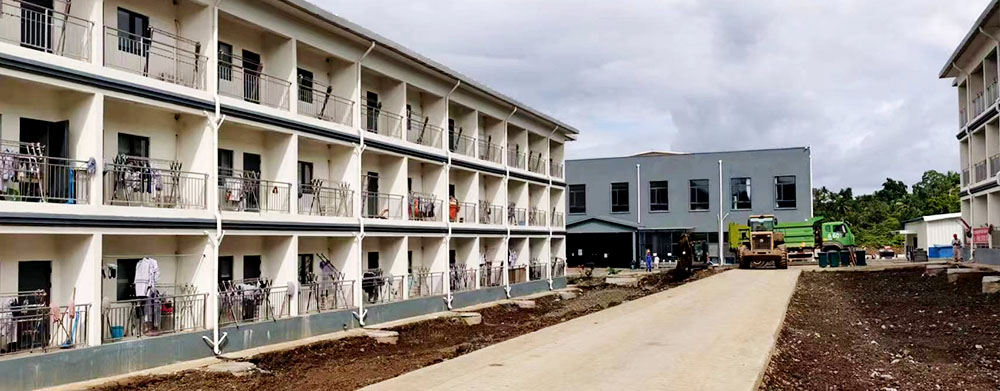
Modular construction for camps relies on dry-type assembly methods that are fundamentally different from traditional wet trades. Floors, roofs, columns and wall panels are connected by bolts and specialized connectors, and integral bathrooms are placed by crane as finished units, which greatly reduces on-site concrete work, plastering and cutting. This approach lowers dust, noise and water use at the project site and shortens the construction window, which is particularly important in sensitive or remote environments.
Construction management for eco friendly modular camps also emphasizes coordination between temporary utilities during the erection phase and the final nine-system configuration. For example, temporary power and water networks can be planned in line with the permanent distribution, avoiding redundant trenches and later rework. In many overseas projects in South America and Africa, standardized installation procedures and training of local workers have enabled stable quality while controlling labour-related environmental disturbances.
Operation, maintenance and camp relocation
During operation, the combination of insulated envelopes, carefully selected HVAC equipment and LED ecological lighting supports lower energy use for accommodation and public buildings. Comparative data from camp manuals show that a 12 W LED lamp can replace a 20 W energy-saving lamp or a 100 W incandescent lamp, with service life extending from around 1,000 hours for incandescent to about 50,000 hours for LED. This reduces both power consumption and the frequency of replacement, which is particularly valuable in remote locations with limited maintenance resources.
For water management, modular camps use integral wastewater treatment equipment that is factory-produced and delivered as a complete unit. Compared with traditional on-site constructed treatment facilities, these units require less site labour, allow automated control, and can be moved and reused when the camp is relocated. Similarly, integral bathrooms are installed in two to six hours instead of weeks of wet construction, are structurally waterproof and can be reused multiple times, which reduces material consumption and waste generation over multiple projects. Together, these features enable eco friendly modular house camps to be dismantled and removed with minimal residual impact on the original site.
A more detailed overview of reusable modular units is available here: reusable container house systems.
Key technologies enabling eco friendly modular house
The performance of eco friendly modular house solutions in EPC camps depends on specific enabling technologies rather than a single feature. On the building envelope side, different insulation thicknesses and materials are selected according to climate categories, with wall and roof systems designed to reach target thermal transmittance and wind load resistance values. This not only reduces heating and cooling demand but also improves indoor comfort for workers exposed to harsh outdoor conditions.
Integral bathrooms represent another important technology, as they are manufactured in one piece including ceiling, floor, walls and all sanitary fixtures. A comparison between integral and traditional bathrooms shows shorter installation periods, elimination of on-site waterproofing and significantly lower risk of leakage, while the units can be recycled and relocated when the camp moves. Wastewater treatment equipment is also engineered as integrated units, with automatic control that reduces dependence on on-site operators and allows systematic monitoring of effluent quality. In the fire-safety domain, wireless fire alarm systems simplify installation by avoiding extensive cabling, which shortens construction time and facilitates flexible reconfiguration inside modular buildings.
Regional applications and climate considerations
Eco friendly modular house design must be adapted to the climate and geography of each project region. For cold regions, such as certain Russian or high-latitude areas, cold-resistant container houses use enhanced insulation in floors, roofs and walls, together with suitable glazing and heating strategies to ensure comfortable indoor temperatures at external conditions down to around minus fifty degrees Celsius. In high-altitude plateau regions, structural and thermal designs are adjusted for temperature differences and solar radiation, while ventilation is organised to cope with thinner air.
In desert and Gobi environments, camp modules emphasize solar protection, sand resistance and lower thermal transmittance, with wall and roof configurations that can reach U-values around 0.36–0.45 W/m²·K, depending on configuration. For tropical coastal regions and islands, corrosion protection and moisture control become key, leading to specific coating systems and ventilation strategies. By configuring eco friendly modular house solutions according to these regional parameters, EPC contractors can maintain performance across different project portfolios while still using a standardized modular technology base.
Case-based insights from global camp projects
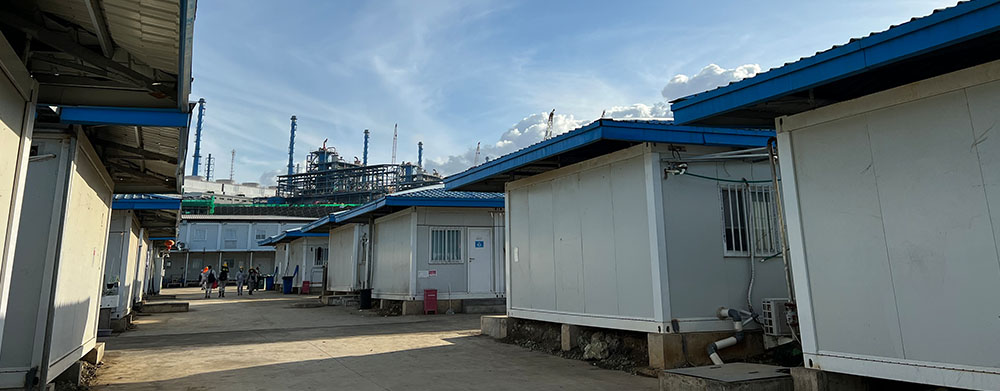
Over the past two decades, modular camp solutions have been applied in more than one thousand projects across over one hundred countries, covering hydropower, mining, port expansion, road and bridge and airport reconstruction projects. Examples include worker camps for hydropower dams in South America, port expansion in West Africa and airport development in island nations, where modular units provided accommodation, offices and public facilities in remote or infrastructure-poor environments. In these projects, eco friendly modular house design has been reflected in recyclable structures, integrated wastewater equipment and green lighting, rather than in single flagship buildings.
Practical experience shows that modules from completed projects can be inspected, refurbished and redeployed to new sites, building a reusable asset pool for long-term EPC partners. In some regions, familiarity with local customs and regulations, combined with cooperation with strong local partners, has improved customs clearance efficiency and logistics reliability, which supports timely delivery of modular houses and environmental systems. These case-based insights indicate that eco friendly modular house implementation is closely linked to project management, logistics and local collaboration, not just design and manufacturing.
Strategic implications for EPC contractors
For EPC contractors, integrating eco friendly modular house solutions into camp design has implications beyond the camp itself. In tendering and early proposal stages, a modular, reusable and environmentally managed camp can strengthen an offer in areas such as social responsibility, environmental protection and worker welfare, especially for clients associated with international rankings and ESG oversight. Over a portfolio of projects, treating modular camps as movable assets rather than consumables can improve capital efficiency and reduce the environmental footprint of successive projects.
From a lifecycle perspective, the combination of industrialized modular houses, nine-system integration and transferable environmental equipment offers a pathway to more predictable costs and risks. Camps can be designed for a defined service period, maintained under clear technical standards, and then dismantled and relocated with limited residual impact at the original site. To explore how integrated camp engineering can support long-term EPC strategies, contractors can refer to this engineering camp EPC solution overview: integrated modular camp solution. As more owners set explicit carbon and ESG targets, eco friendly modular house solutions in EPC camp projects are likely to evolve further towards higher energy performance, smarter monitoring and deeper integration with local communities.
Conclusion
For EPC contractors, integrating eco friendly modular house solutions into camp design has implications beyond the camp itself. In tendering and early proposal stages, a modular, reusable and environmentally managed camp can strengthen an offer in areas such as social responsibility, environmental protection and worker welfare, especially for clients associated with international rankings and ESG oversight. Over a portfolio of projects, treating modular camps as movable assets rather than consumables can improve capital efficiency and reduce the environmental footprint of successive projects.
From a lifecycle perspective, the combination of industrialized modular houses, nine-system integration and transferable environmental equipment offers a pathway to more predictable costs and risks. Camps can be designed for a defined service period, maintained under clear technical standards, and then dismantled and relocated with limited residual impact at the original site. As more owners set explicit carbon and ESG targets, eco friendly modular house solutions in EPC camp projects are likely to evolve further towards higher energy performance, smarter monitoring and deeper integration with local communities.




 More
More








![Top Advantages of Modular Construction Explained [2025]](/uploads/upload/images/20250424/0fb390068474145a09a8c0504c73b1d2.png)
 May 09, 2025