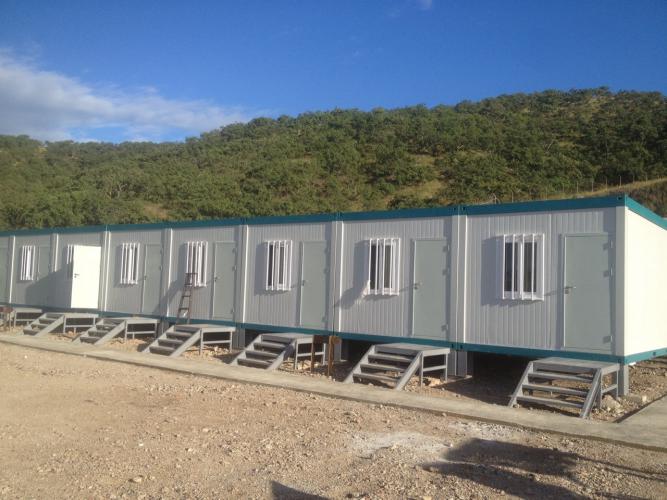
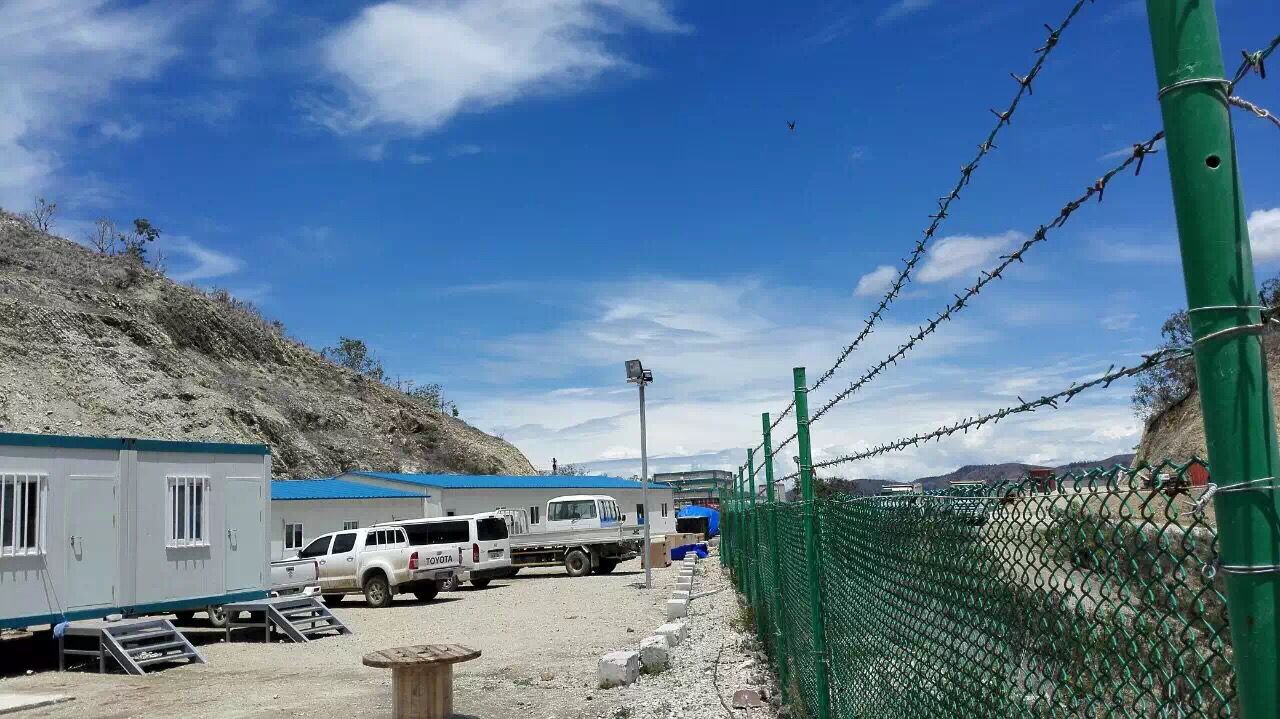
Oil and gas companies operating LNG plants, pipelines and drilling sites need reliable camp accommodation container house solutions that can keep large teams safe, comfortable and productive in some of the world’s harshest locations. From West African LNG export terminals to Russian Far East fields and plateau hydropower projects in South America, Chengdong Housing has delivered modular worker camps for more than a thousand projects across over one hundred countries, giving it deep experience in engineering, supplying and installing complete camp systems. This article explains how a modern camp accommodation container house system addresses safety, standards, ESG, and full‑lifecycle EPC requirements for oil and gas worker camps.
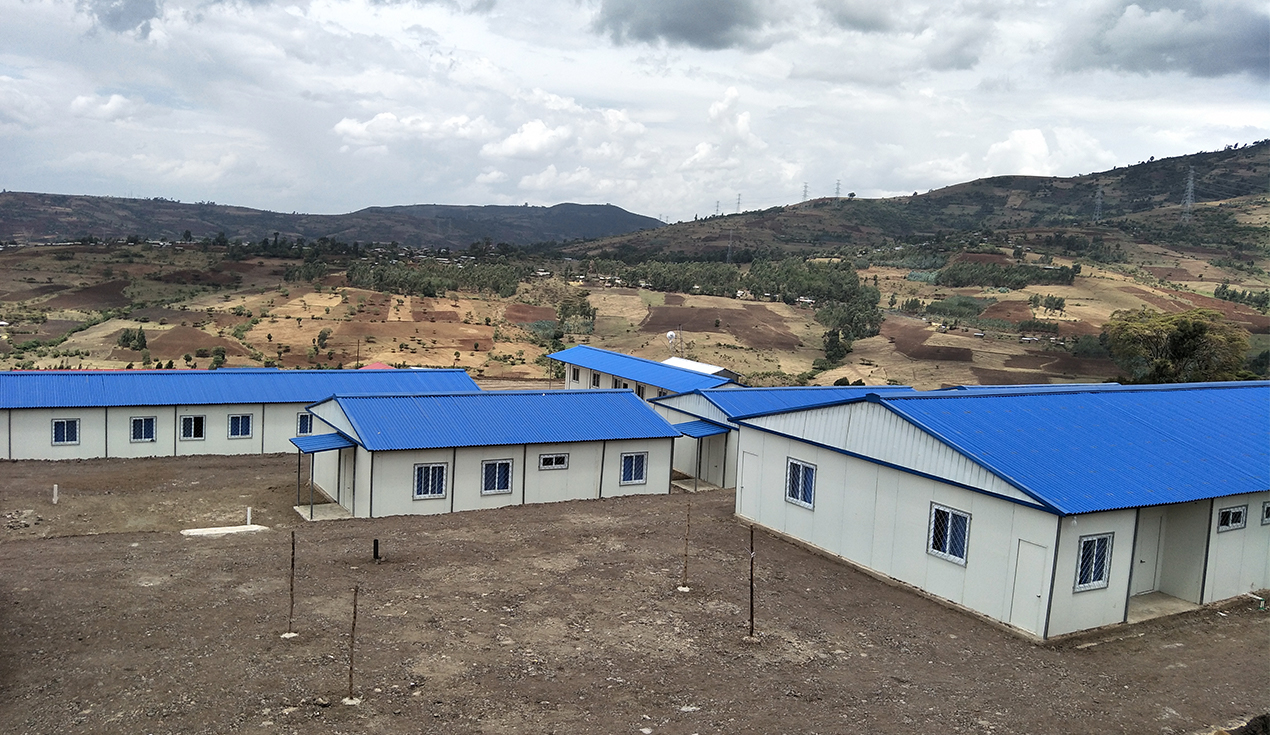
Why oil and gas camps choose container houses
For remote oil and gas projects far from cities, camp accommodation container house solutions offer a practical way to create a fully functioning “project town” in a short time. Chengdong’s modular container houses use factory‑produced structural frames, insulated wall and roof panels, and integrated floors and ceilings, allowing rapid onsite assembly and later relocation with minimal construction waste. Compared with traditional masonry or cast‑in‑place buildings, container camps can be planned, installed and demobilized much faster, while still meeting demanding safety and comfort standards.
Chengdong positions itself as an expert camp builder for global engineering projects, including many energy and infrastructure sites. The company integrates research, production, sales and onsite construction, and has completed over one thousand camp projects in more than one hundred countries for large Chinese contractors and ENR‑listed international partners. Its mission is to “create an accommodated house for all project workers,” with solutions emphasizing humanity, quality, integration, intelligence and green development, all of which are critical for oil and gas clients facing strict HSE and ESG requirements.
Extreme environments: four climate‑focused container systems
Oil and gas worker camps often sit in high plateaus, polar regions, deserts or tropical coastal zones where wind, temperature and humidity stresses are severe. Chengdong’s camp accommodation container house portfolio is segmented into specialized systems for cold‑resistant, plateau, Gobi and desert environments, each with targeted structural and insulation configurations.
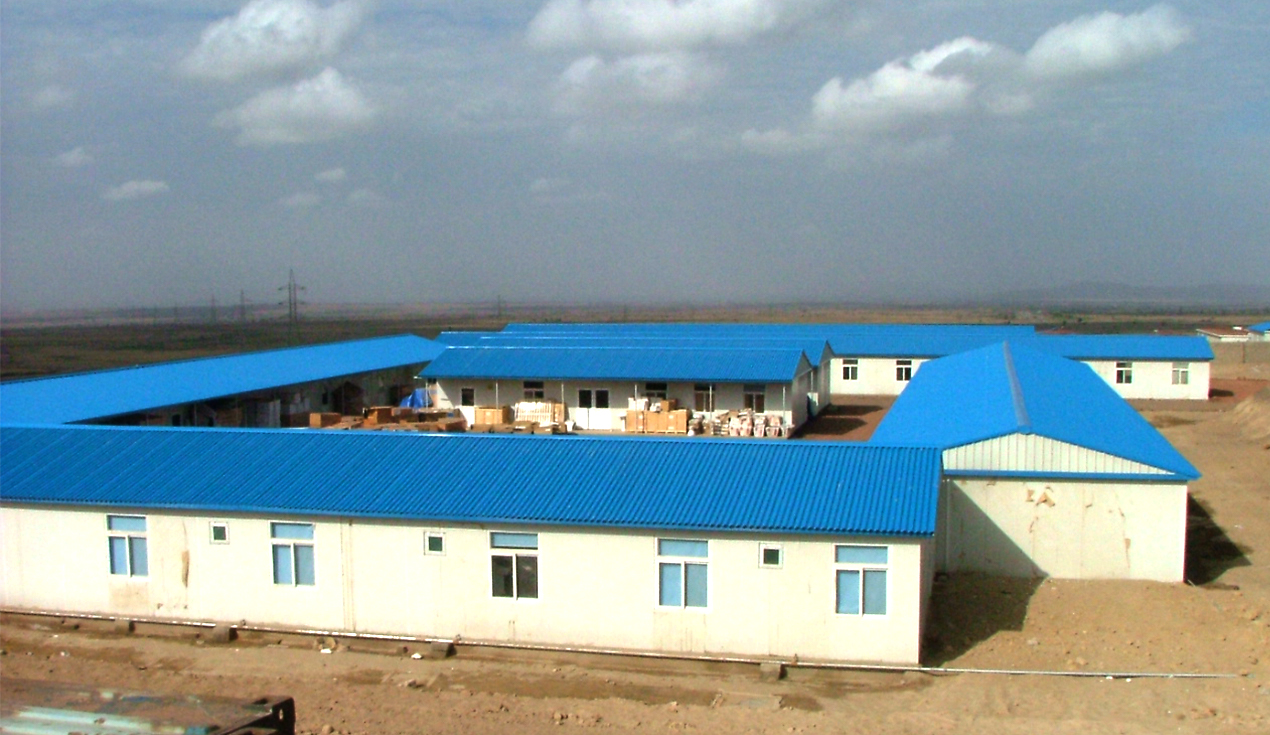
Cold‑resistant container houses for arctic and sub‑arctic projects
For LNG and pipeline projects in regions where winter temperatures fall to between minus 40 and minus 50 degrees Celsius, Chengdong has developed a cold resistant box house system with carefully engineered thermal envelopes. Depending on the temperature band, wall insulation thicknesses typically range from 110 mm to 190 mm with densities around 140 kg per cubic meter, and overall heat transfer coefficients as low as about 0.25 to 0.45 W per square meter‑Kelvin, which significantly reduces heat loss and energy demand for space heating. Roof and window configurations pair these wall systems with Low‑E glazing and optimized roof insulation to keep interior spaces warm and reduce condensation risk.
The structural frame uses high‑strength galvanized steel sections such as SGH440 or Q355 with specified thicknesses (for example around 4.0 mm for key members), ensuring that snow loads and strong seasonal winds can be resisted safely. Cold‑climate container houses are also designed to be pre‑fabricated and assembled with standardized fasteners and connection details, allowing installation teams to work efficiently in low‑temperature conditions without extensive wet trades. For oil and gas projects in Russian regions or other polar environments, such cold‑resistant camp accommodation container house solutions can maintain safe interior temperatures and robust structures throughout long winters.
Plateau container houses for high‑altitude energy projects
In high‑altitude regions such as plateau hydropower or pipeline crossings, thin air, significant daily temperature swings and strong winds create special design challenges. Chengdong’s plateau container house configurations emphasize enhanced structural stability, insulation suitable for cool but solar‑intense climates, and design allowances for oxygen supply and ventilation. These camps are used in projects such as Argentine hydropower developments and high‑elevation sites in Western China, where reliable worker rest conditions are essential for safety and performance.
Key design points include structural systems tuned for plateau wind loads, insulation systems that balance heat retention at night with controlled solar gain by day, and ventilation strategies that support indoor air quality at altitude. Because all modules are factory‑produced, plateau camps can be transported and installed rapidly during short construction seasons, a frequent constraint in high‑altitude energy projects.
Gobi and desert container houses for arid oil and gas fields
Onshore oil and gas fields in Central Asia and the Middle East face sandstorms, large diurnal temperature differences and intense solar radiation. Chengdong’s Gobi and desert container house solutions respond with optimized insulation, dust‑resistant envelope details and drainage and shading measures. For Gobi‑type environments, the outside envelope can be designed around heat transfer coefficients near 0.45 W per square meter‑Kelvin, combined with robust wind‑resistant structural systems and sand‑resistant details in doors and windows.
Desert container house systems reduce solar heat gain by using wall configurations with heat transfer coefficients around 0.36 W per square meter‑Kelvin and carefully selected roof and façade materials, while also integrating shading, drainage slopes and layout planning that mitigates sand accumulation and flooding during rare heavy rains. For Middle Eastern LNG and gas processing camps, this means a camp accommodation container house layout that maintains interior comfort at high external temperatures and lowers energy use for cooling.
Nine‑system integrated camp design for safety and comfort
A key difference between an ordinary container house and a complete camp accommodation container house for oil and gas workers is the integration of all supporting systems. Chengdong’s approach is built around a “menu of nine systems,” covering buildings, water and heating, power, weak current, fire protection, security, roads and traffic, environmental landscaping, and environmental protection.
From the earliest planning stage, engineers analyze site data such as topography, drainage patterns, road access, environmental conditions and camp population composition. They then generate camp layout plans that divide the site into accommodation zones, public zones (canteens, gyms, recreation), operational buildings and infrastructure areas, optimizing both function and aesthetics. For example, a reference camp planning case uses double and single rooms, suites and hostels to house more than 500 people, combined with a canteen sized for 500 diners and an associated gym space, within a total camp area of about 42,800 square meters and a green rate of around 17 percent.
Building system: modular dorms, offices and support buildings
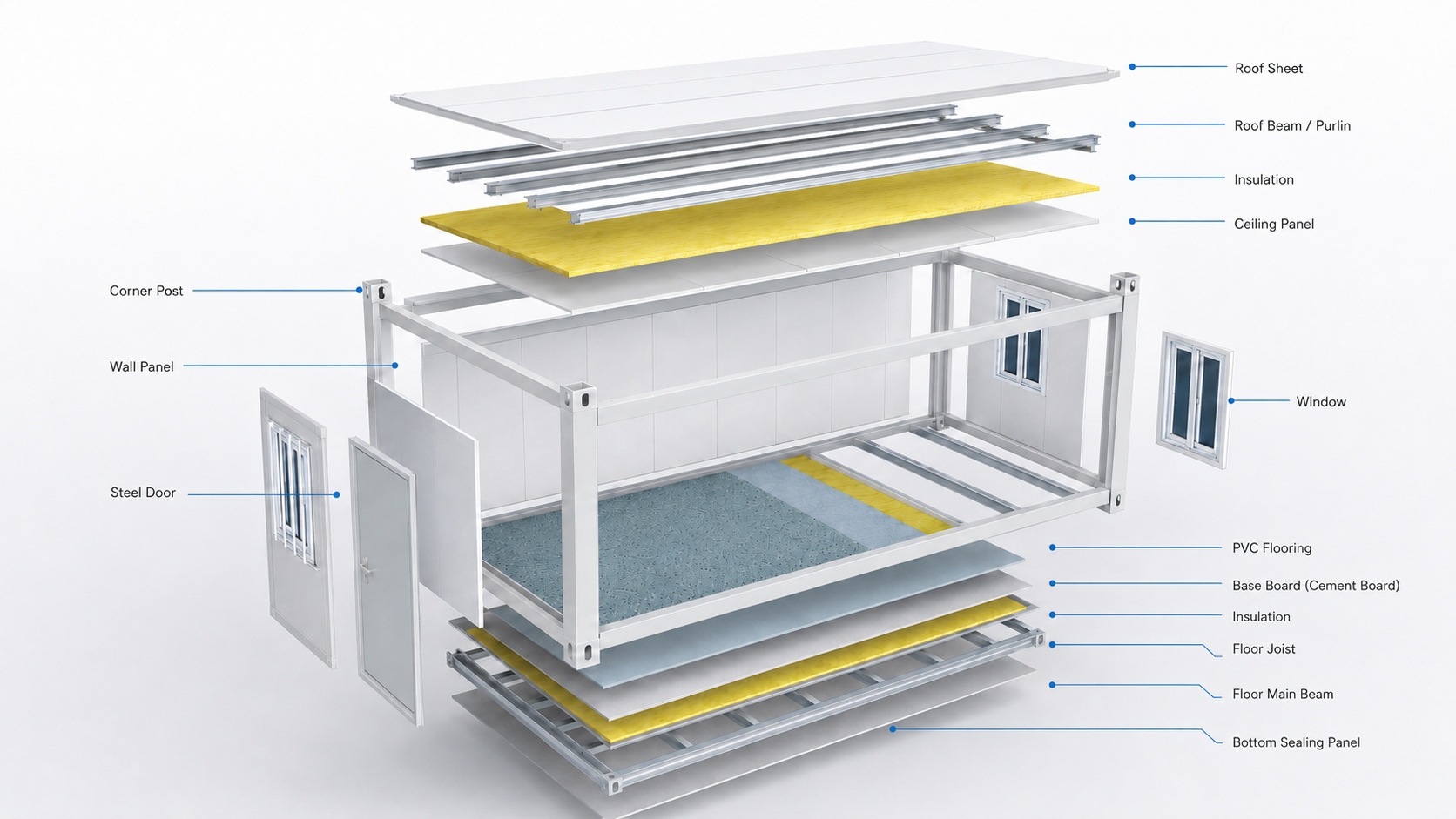
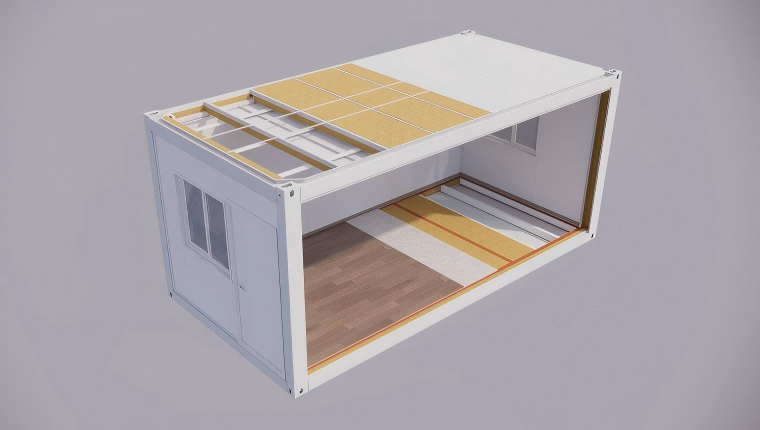
Within the building system, Chengdong provides a variety of modular units including accommodation buildings, offices, medical buildings, production and operation buildings, public bathhouses, religious buildings, dining halls, warehouses and recreational facilities. Each camp accommodation container house module is produced with hot‑dip galvanized structural members, integrated floors and roofs, and sandwich wall panels (for example 75 mm glass wool panels around 55 kg per cubic meter) that provide both insulation and fire safety. Standard configurations use floor structures with around 100 mm of glass wool insulation and ceilings with similar insulation thickness and an aluminum foil layer, while wall panels may be upgraded to polyurethane sandwich panels between 75 mm and 100 mm thick for more demanding climates.
Interior arrangements are designed to meet oil and gas worker needs, with options like 45‑foot modular units providing about 41 square meters for office or accommodation use, 38‑foot units around 34 square meters, 27‑foot modules around 24.7 square meters, and 20‑foot modules around 14.7 square meters. Units can be combined side‑by‑side or stacked to create larger complexes, enabling flexible dormitory and office layouts depending on camp population and site constraints.
Water, power and fire protection systems for oil and gas standards
For oil and gas worker safety, robust water supply, drainage, power and fire protection systems are indispensable. Chengdong’s nine‑system approach defines core equipment such as water supply pumps, water tanks, water treatment units, grease traps, septic tanks, main transformers, backup diesel generators, fire water tanks and sewage treatment equipment. A planning example includes a 30 cubic meter water tank, a 30 cubic meter septic tank (four units), a 2,500 kVA transformer, a 1,000 kVA backup generator, a 108 cubic meter fire water tank and a sewage treatment device sized for 10 cubic meters per hour, giving an indication of the scale required to support a mid‑sized energy camp.
Fire protection system design covers automatic sprinklers, indoor fire hydrants, fire extinguishing equipment, emergency lighting and evacuation signage. In some camps, Chengdong deploys an intelligent wireless fire alarm system with smoke and temperature sensors, offering easier installation, flexible arrangement and lower cabling and installation labor than traditional wired systems, while still providing early warning and protection for containerized buildings. This is particularly important for high‑density camp accommodation container house complexes in oil and gas contexts, where quick detection and evacuation are crucial.
Security, ICT and environmental systems
Oil and gas camps require reliable security and information systems to manage access, monitor sensitive areas and maintain communication. Chengdong’s security system menu includes perimeter fences, watchtowers, CCTV, access control gates, intrusion alarms and emergency medical rescue facilities. Weak‑current systems cover telephone, cable TV and information networks, enabling both operations and worker welfare services.
Environmental and environmental protection systems support ESG objectives. Landscaping, sports fields and fitness equipment improve the living environment and worker well‑being, while waste collection and sewage treatment equipment prevent untreated wastewater and solid pollutants from entering local water bodies. Chengdong compares integrated sewage treatment units with traditional systems, noting advantages in factory pre‑fabrication, easier on‑site installation, automatic control and the ability to relocate the equipment with the camp, which is highly relevant for temporary oil and gas camps.
Fast deployment and scalable capacity for large crews
Oil and gas projects often face demanding schedules and require rapid mobilization of hundreds or thousands of workers. Chengdong emphasizes high prefabrication rates and strong production capacity to support quick deployment of camp accommodation container house modules. Its own factory assets allow it to reach prefabrication levels of over 80 percent for modular houses, with the ability to deliver around 300 completed house units per day under peak production scenarios.
Because floors, roofs and walls are produced in a highly integrated manner, onsite installation mainly involves bolted connections, panel insertion and MEP hook‑up, significantly shortening the onsite construction period compared with traditional building methods. For large LNG or refinery camps, this speed difference can translate into weeks or months of schedule advantage, enabling earlier commissioning or production start‑up. At the end of a project, container modules can be dismantled and relocated or stored for future re‑use, improving asset utilization and reducing demolition waste.
Full‑lifecycle 5S / 360° EPC camp service
Chengdong not only supplies individual camp accommodation container house units but also positions itself as a provider of full‑lifecycle camp solutions based on a “5S” or “360” service concept. This lifecycle spans master planning, design, production, logistics, onsite installation, operation support, renovation, storage and re‑use, forming a closed loop for camp assets.
The company reports long experience in managing global projects and cooperating with strong local partners, which allows it to organize local labor, adapt to country‑specific construction norms and deliver camps efficiently even in regions with strict labor management rules such as certain South American countries. For oil and gas clients, this means that a single team can coordinate camp layout design, nine‑system integration, factory production, overseas shipping, customs processes, onsite assembly guidance and later demobilization or refurbishment.
Chengdong’s internal quality and certification system supports this EPC offering. The company holds certifications including ISO 9001 quality management, ISO 14001 environmental management, and OHSAS 18001 occupational health and safety, as well as CE certifications for steel structures (EN 1090) and sandwich panels (EN 14509), and a special‑grade qualification for the design, production and installation of integrated housing by the China Steel Construction Society. These credentials help satisfy international oil and gas companies’ requirements for quality control, environmental performance and worker safety.
ESG and green development in worker camps
Oil and gas operators increasingly face ESG and carbon‑reduction pressures, even for temporary worker camps. Chengdong explicitly incorporates ESG considerations into its development strategy, highlighting green, integrated and recyclable modular products and systems. Container modules are designed for multiple assembly and disassembly cycles without material loss, and entire houses can be transported and reused on new projects instead of being demolished.
Within the nine‑system framework, Chengdong promotes ecological lighting, integrated bathrooms and advanced wastewater treatment equipment to reduce resource consumption and environmental impact. For example, LED lighting is compared with compact fluorescent and incandescent lamps, showing significantly longer service life and lower power consumption per unit of light output, which improves energy efficiency for large camps. Integrated bathrooms are factory‑molded units that include walls, floors, ceilings and all fixtures; they require only two to six hours to install, do not need traditional waterproofing, and can be recycled across multiple dismantling cycles, cutting onsite wet work, water consumption and waste.
For wastewater, integrated treatment units use automatic control without continuous manual guarding and can be relocated with the camp, offering a more flexible and sustainable solution than conventional fixed plants that cannot be moved after commissioning. These choices align the camp accommodation container house concept with the broader ESG goals of minimizing environmental footprint while maintaining high living standards for workers.
Global project experience in energy and mining
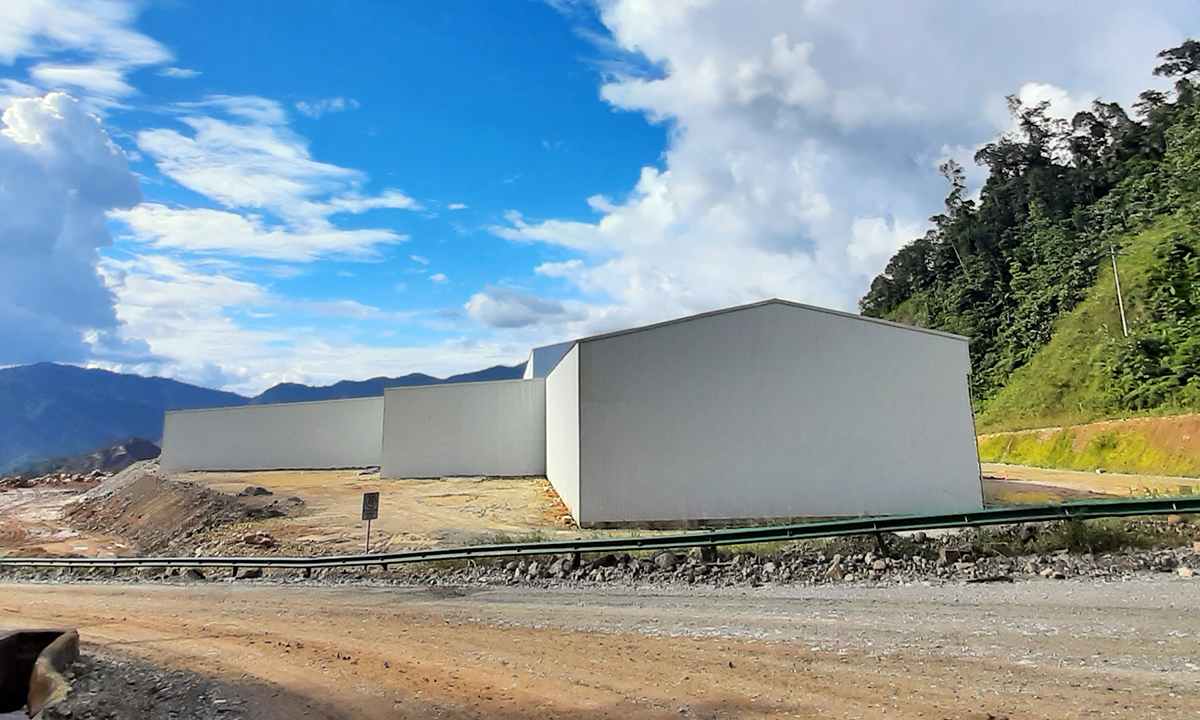
Although individual project names may vary, Chengdong’s case portfolio demonstrates extensive experience in supporting energy and mining camps worldwide. The Camp Manual 2.0 highlights projects such as power plants in Venezuela, Guyana, multi‑mineral projects in Peru, potassium salt plants in Bolivia and major hydropower developments in Argentina, all of which relied on integrated modular camp solutions. Other cases include port expansions, airport reconstruction and road and bridge projects in Africa and Asia, showing the adaptability of the same modular technology to different infrastructure sectors.
The core challenge‑solution‑result pattern in these cases aligns closely with oil and gas camp needs. Common challenges include remote locations far from cities, harsh climatic conditions, tight schedules, large and diverse workforces, and demanding safety and quality expectations. Chengdong’s solutions combine climate‑appropriate camp accommodation container house designs, comprehensive nine‑system engineering and robust logistics and local partner coordination, leading to camps that are delivered on time, meet functional and safety requirements, and provide comfortable “home‑like” environments for project workers.
Calls to action for oil and gas project teams
Oil and gas owners, EPC contractors and drilling companies evaluating camp accommodation container house options for LNG plants, refineries or pipeline spreads can benefit from Chengdong’s specialized experience in extreme environments and integrated camp systems. A logical next step is to engage with Chengdong’s engineering team early in project planning to align camp capacity, climate design, standards and schedules with the broader project execution plan.
For more information on Chengdong Housing’s modular camp solutions and to explore typical layouts, product specifications and project cases, you can visit the official website at https://www.cdph.net. Project decision‑makers can also request detailed technical documentation, arrange a factory or showroom visit before tendering, or seek tailored proposals for oil and gas worker camp accommodation container house schemes that match their specific site and ESG requirements.




 More
More








![Top Advantages of Modular Construction Explained [2025]](/uploads/upload/images/20250424/0fb390068474145a09a8c0504c73b1d2.png)
 May 09, 2025