
Tel / Whatsapp:+86 18001125785

Email:chengdong@cdph.com.cn

INQUIRY→

Home/

News/

Blog/

Why Pharmaceutical Projects Need Modular Camps/

Why Pharmaceutical Projects Need Modular Camps

Blog

Release date:Feb 12, 2026

Share:

Pharmaceutical and biotech plants live or die by control: control of particles, microbes, people flow, and documentation. As production moves closer to clinical trials, quality teams also demand that worker housing, offices, and support facilities do not become a hidden source of contamination risk. Modular house solutions make it possible to build hygienic, compliant camps and support areas in parallel with the main plant, instead of waiting for traditional civil construction.


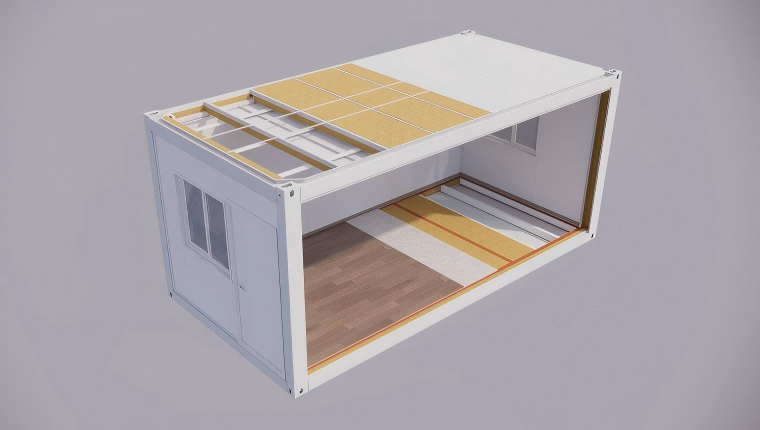
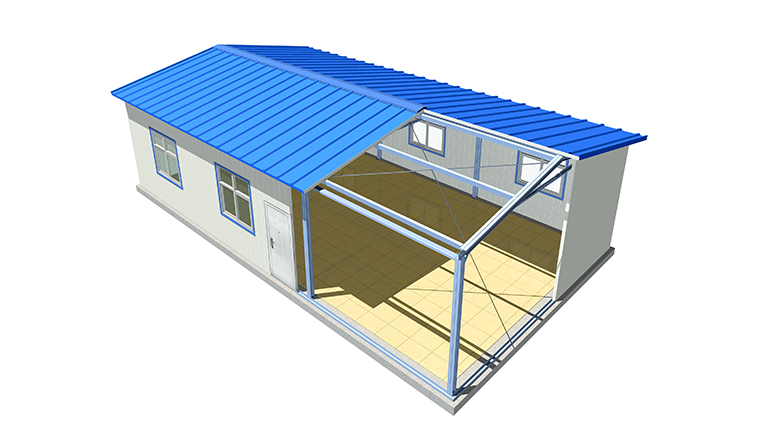
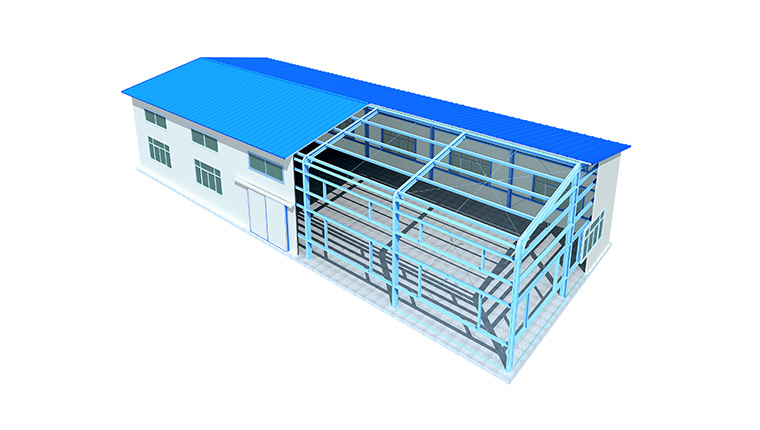
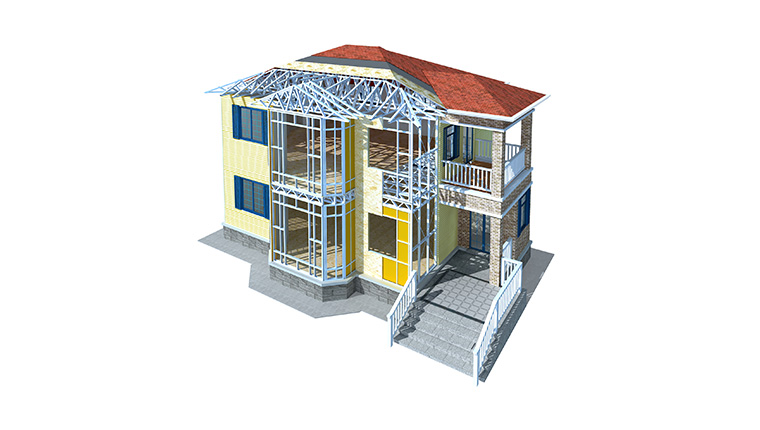
In this article, “modular house” refers to factory-prefabricated buildings (container houses, light steel villas) that are shipped in sections and rapidly assembled on site to form complete camps and support facilities.


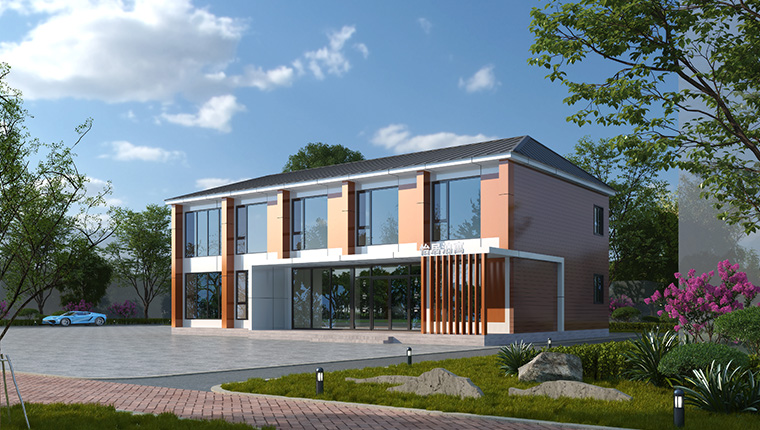
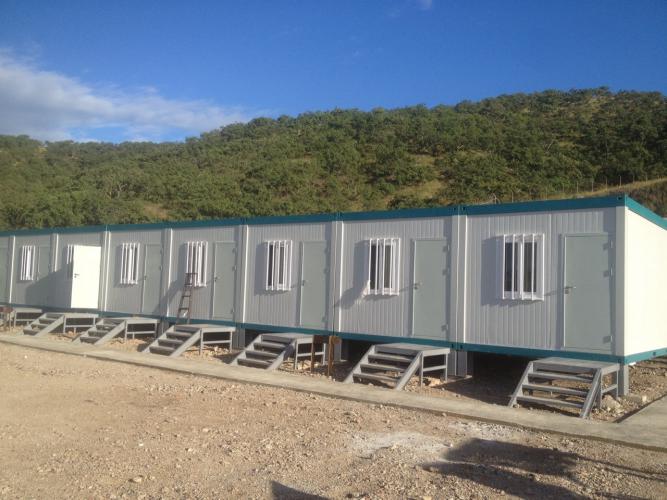
Modular Camps


Cleanliness, GMP, and Hygienic Modular Design


Pharma projects are governed by strict standards such as GMP and ISO 14644 for particle control, surface hygiene, and airflow management. While these standards typically target production areas, support buildings can be designed to align with the same principles so they do not undermine the controlled core.


A modular camp or support facility for pharma typically incorporates:

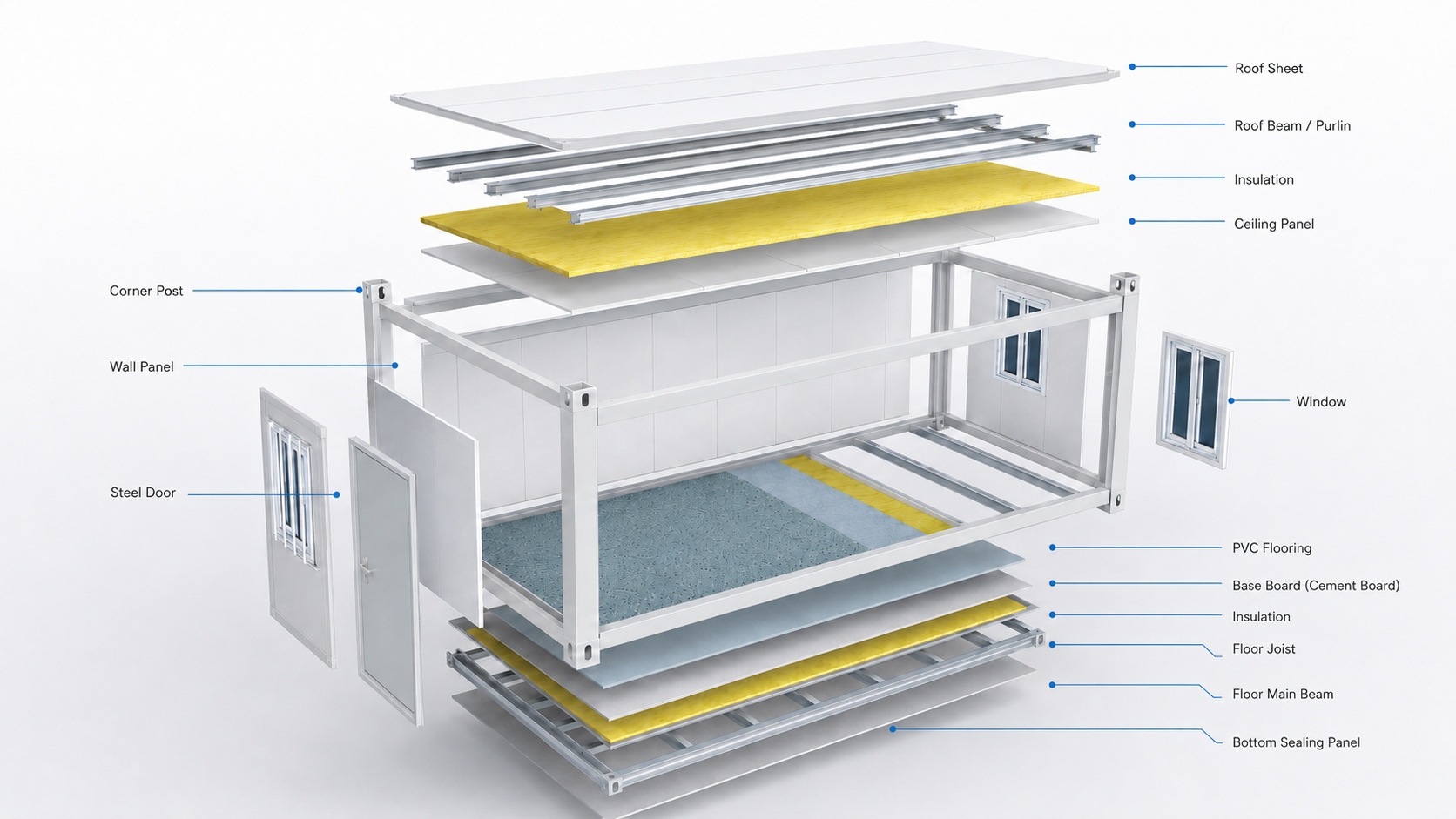
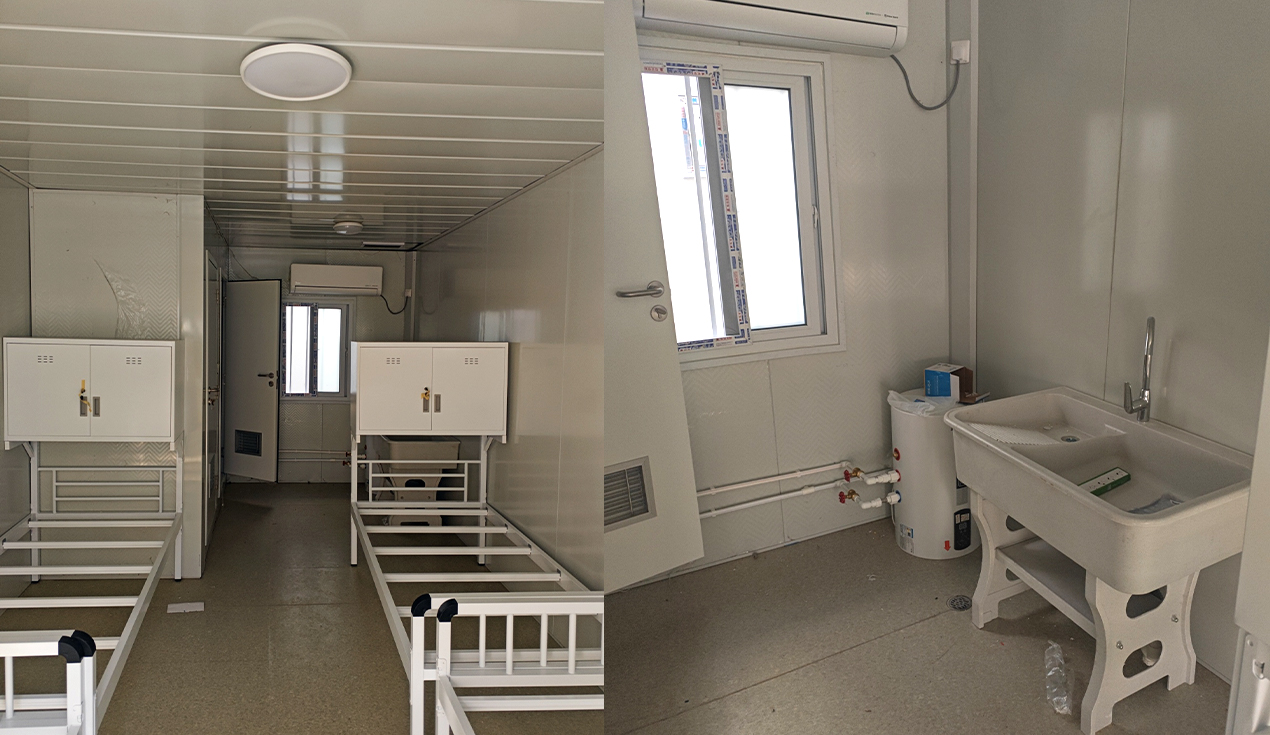
  • Cleanable interior finishes Wall and ceiling panels use smooth, non-porous sandwich panels and PVC finishes that resist mold, corrosion, and repeated disinfection. Corners and junctions are detailed to minimize dust traps and allow wipe-down cleaning.

  • Moisture and mold control Steel structures receive hot-dip galvanizing and color coatings for anti-corrosion; insulation and vapor barriers are designed to prevent condensation in high-humidity regions, from tropical rainforest to coastal climates. This reduces the risk of bacterial growth in hidden cavities.

  • Air filtration and zoning Modular buildings can be delivered with pre-engineered HVAC and filtration systems, including HEPA or fine filters, pressure zoning between clean and less-clean spaces, and fresh air provisions. Even if not full cleanrooms, worker changing rooms, clinics, and sampling labs can be treated as controlled zones.

  • Controlled flows of people and materials Layouts separate “clean” paths for staff entering work from “dirty” routes associated with logistics, waste, and deliveries, reducing cross-contamination. Modular corridors, vestibules, and airlocks can be added simply by combining standard modules.


Before going deeper, how would you describe—in your own words—the difference between a basic construction camp and a pharma camp in terms of cleanliness needs?


Living and Working Environments that Support Sterility


Operators and QC staff often move between their accommodation, offices, and highly controlled production areas, so the camp itself should support good hygiene behavior. Modular houses make it possible to design this environment deliberately instead of treating worker housing as an afterthought.


Key design moves include:

  • Accommodation blocks aligned with hygiene protocols Dormitories can integrate locker rooms, shower zones, and laundry areas placed along the route to shuttle points or plant entrances, encouraging handwashing, clothes changes, and separation between “street” and “work” clothing.

  • Dedicated office and QC support areas Offices, meeting rooms, and training spaces are often built with the same envelope performance as light clean areas—good airtightness, insulation, and low-VOC finishes—supporting documentation work, batch review, and audits in a comfortable, low-contamination environment.

  • On-site clinics and medical rooms Many large camps already include medical offices, treatment rooms, and isolation spaces built with modular houses, using easy-to-clean finishes and medical-grade fit-out. For pharma, these spaces can also function as occupational health checkpoints to manage staff health and infection risks.

  • Separation of clean living areas from “dirty” activities Kitchens, canteens, material yards, and maintenance workshops are arranged with clear buffers and, where needed, physical fences between worker living quarters and higher-risk activities, such as heavy repair or waste storage.


Fast-Track Deployment in Parallel with Plant Construction


Pharmaceutical investments are both capital-intensive and time-sensitive: every month of delay can push back product launch or clinical supply. A key advantage of modular house solutions is that worker camps, temporary offices, labs, and support buildings can be deployed in parallel with the plant’s civil works.


Several features make this possible:

  • Industrialized off-site fabrication Steel frames, wall panels, electrical circuits, and plumbing kits are pre-engineered and prefabricated in the factory, often including pre-installed distribution boxes and wiring to minimize on-site work. This reduces dependence on scarce local trades and shortens installation time.

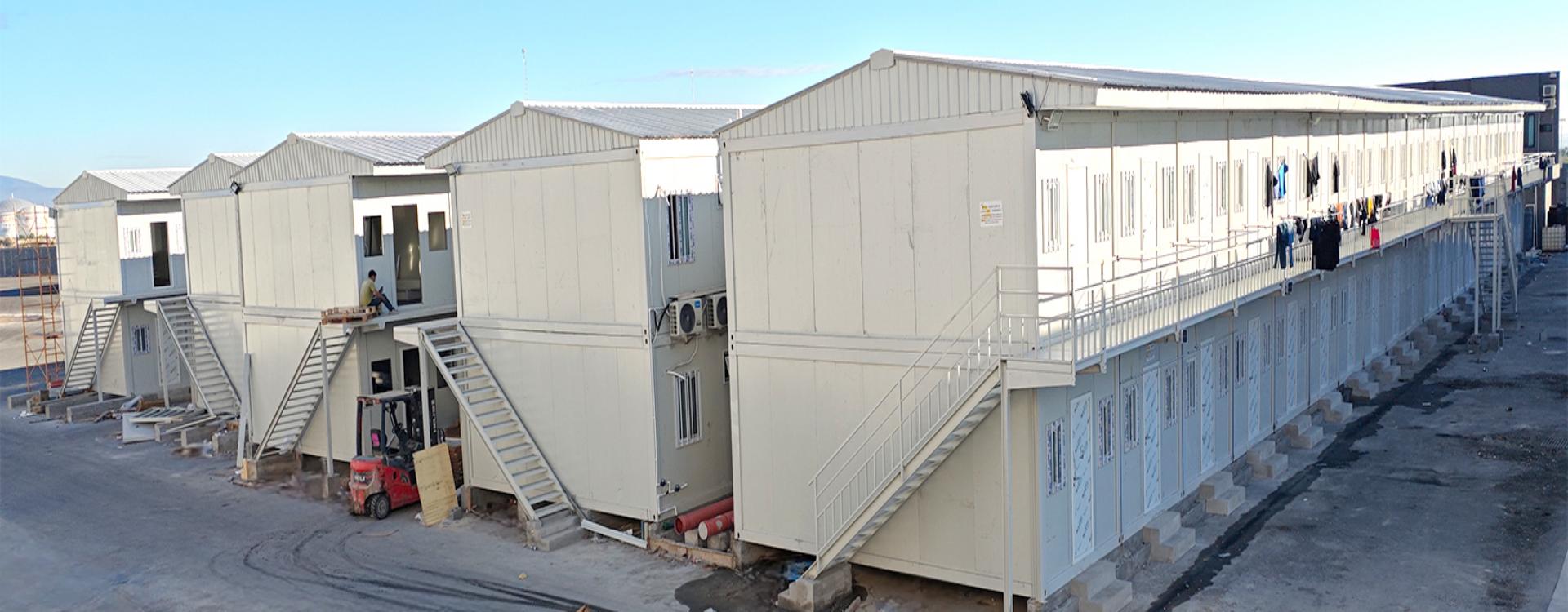
  • High-speed on-site assembly Large camps of tens of thousands of square meters have been assembled in roughly 120 days, even in demanding climates, by bolted connections and standardized modules that require no welding or on-site painting. For a pharma project, this means living, office, and ancillary functions are ready before commissioning teams arrive.

  • Scalable, phased deployment Modular design allows incremental expansion: start with core accommodation and offices, then add extra dormitories, laboratories, training centers, or warehousing as headcount grows. Modules can also be relocated or reconfigured as the project moves from construction to routine operation.

  • Global logistics and remote sites Modular houses are designed to ship efficiently by standard containers or flatpacks and to perform in environments from arctic cold to deserts and tropical humidity. This is particularly valuable for greenfield pharma or biotech plants located near raw material sources or ports in remote regions.


Safety, Fire Protection, and Emergency Planning


Modular Camps


Pharmaceutical and biotech projects also face elevated expectations on EHS (environment, health, and safety), including fire safety, emergency access, and waste handling. Modular camps can be engineered to meet these expectations and to demonstrate compliance during frequent audits.


Typical measures include:

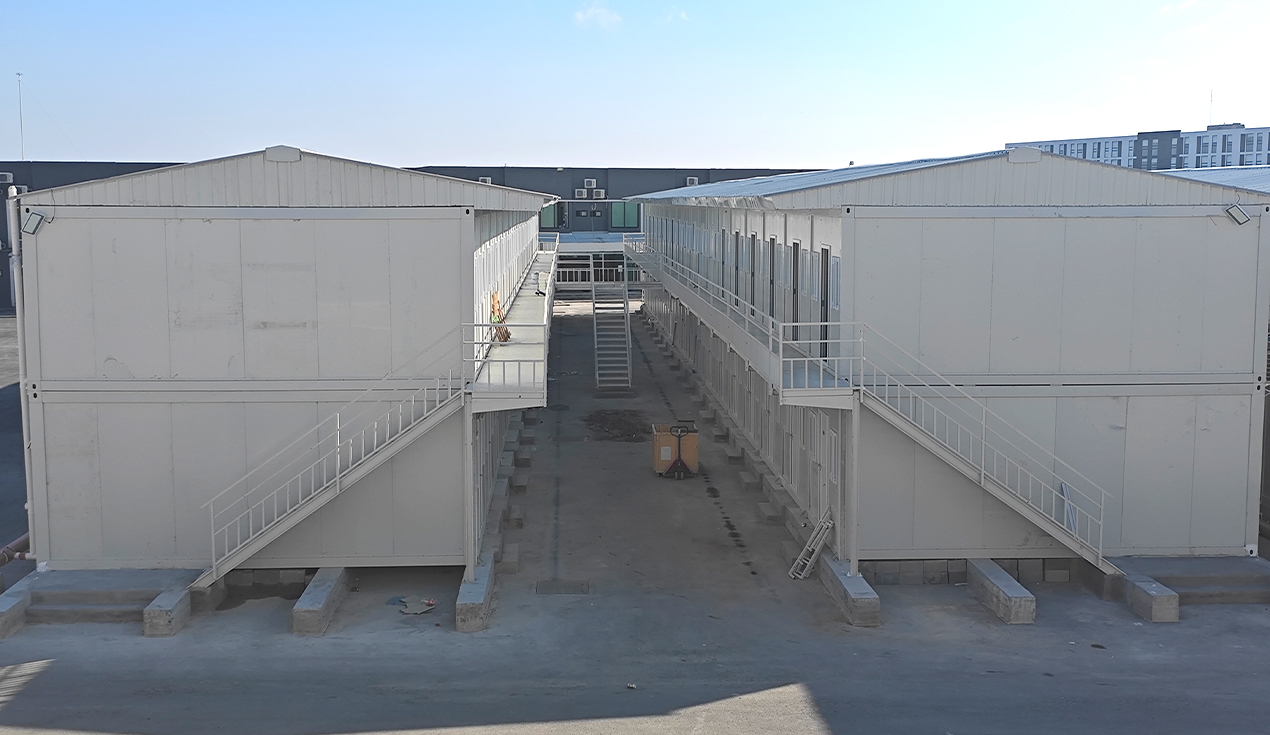
  • Fire safety strategy Structures use flame-retardant sandwich panels and galvanized steel frames with carefully designed fire resistance and insulation. Building spacing, often at least several meters, is planned so that fire trucks can access all sides and to reduce fire spread risk.

  • Firefighting equipment and systems Each building or zone is equipped with portable extinguishers sized by area and risk, and critical locations such as kitchens, warehouses, and workshops receive additional equipment. Depending on project requirements, hydrants, hose reels, and automatic alarms can be integrated.

  • Emergency escape and access Road layouts are typically ring-shaped or looped with open ends, ensuring clear evacuation routes and access for emergency vehicles. Modular staircases, external escape balconies, and illuminated wayfinding can be added systematically.

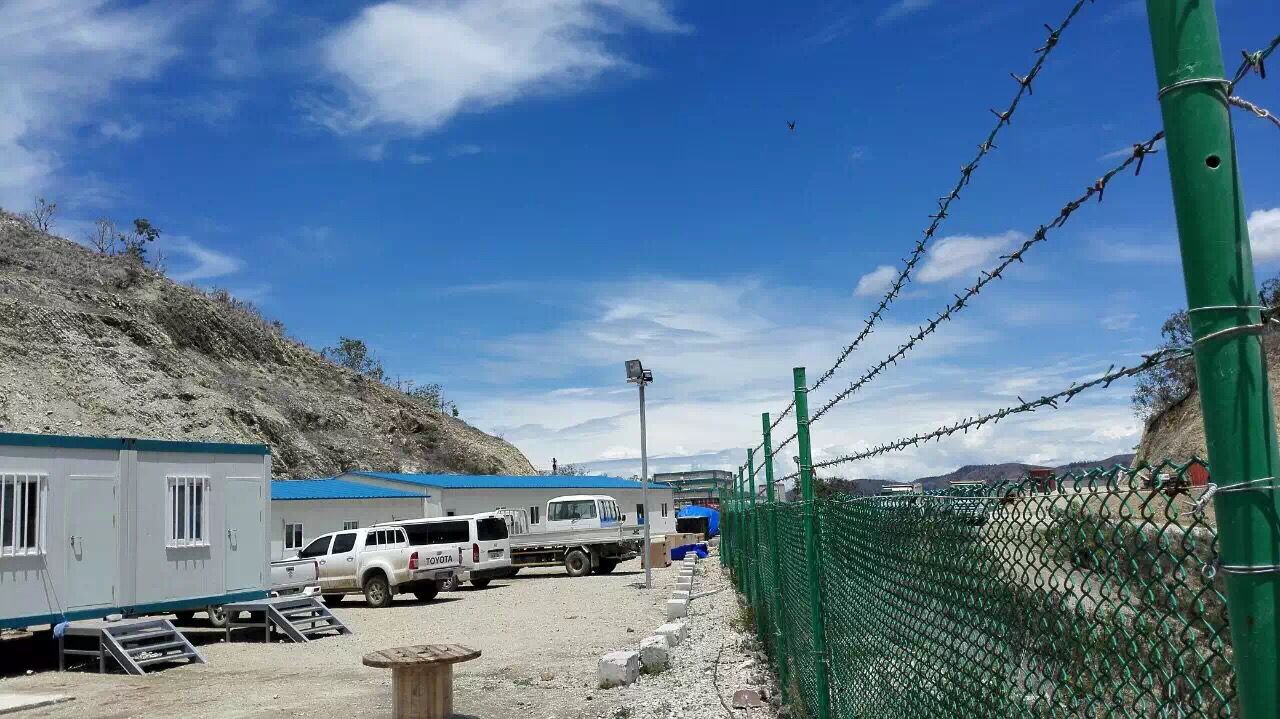
  • Security and controlled access Perimeter fences, guarded gates, and integrated CCTV help control entry and exit, which is important for both safety and protection of intellectual property and sensitive materials.


For pharma and biotech, these baseline measures can be complemented with site-specific requirements, such as special storage for solvents, gases, or flammable intermediates, all housed within modular structures designed for the required fire rating.


Medical Waste and Contaminated Material Handling


Although primary production waste is usually handled inside the plant, camps and support facilities also produce medical and potentially contaminated waste through first-aid clinics, on-site sampling, and occupational health services. A well-designed modular camp anticipates this with dedicated spaces and flows.


Key elements:

  • Temporary medical waste storage rooms Modular rooms with washable finishes, controlled ventilation, and secure access can be placed near clinics for interim storage of sharps, contaminated PPE, and biological samples before transfer to the plant’s central or external disposal system.

  • Segregated waste streams Layouts create clear physical separation between regular domestic waste (from kitchens and dormitories) and clinical or lab waste, reducing the risk of cross-contamination and ensuring regulatory segregation. Color-coded bins and signed routes reinforce correct behavior.

  • Safe loading and transport interfaces Camps can include dedicated loading bays or small transfer stations where licensed waste contractors or plant vehicles collect medical waste without passing through clean living areas.


From Technical Concepts to Real-World Modular Cases


Even though many reference projects are in energy, mining, and infrastructure, they demonstrate technical capabilities directly transferable to pharmaceutical camps and support facilities.


A few relevant patterns from past large-scale modular house projects:

  • High-standard accommodation with airtightness and corrosion control Large camps have used enclosed structural frames, seamless roof–wall junctions, and factory-prefabricated wiring to deliver airtight, low-maintenance buildings with minimal on-site welding and no paintwork. The same envelope details can support hygienic, particle-controlled pharma support buildings.

  • Integrated medical, office, and recreation facilities Airport and port expansion camps have combined office buildings, dormitories, medical offices, sports, and leisure facilities in integrated modular layouts, proving that a complete “mini-town” can be built from modular houses while maintaining safety and hygiene standards.

  • Performance in harsh climates Modular houses have been adapted for arctic cold, desert heat, tropical humidity, and high altitudes by customizing insulation, cladding, and structural design, showing that climate constraints are not a barrier for remote pharma projects.


These experiences form a technical foundation for modular pharmaceutical camps that pair GMP-conscious design with proven large-camp delivery capabilities.


How Modular Houses Support Compliance and Audits


Modular Camps


Pharmaceutical projects are subject to frequent inspections from internal QA, corporate EHS, regulators, and sometimes clients or partners. Well-documented, modular camp designs help simplify these interactions instead of adding risk.


Benefits include:

  • Traceability through standardized design Modular house systems are backed by design manuals, specifications, and certifications (such as CE and cleanroom-related standards), making it easier to show that materials, structures, and finishes meet defined performance benchmarks.

  • Consistent quality from factory to site Because components are produced in controlled factory conditions, there is less variability than with fully on-site construction, which supports consistent hygienic and safety performance across multiple projects or regions.

  • Ease of upgrade and retrofitting If audit findings require changes—such as adding a new gowning room, improving zoning, or upgrading a filtration stage—modular buildings are easier to extend or reconfigure than conventional structures. Additional modules can be attached or internal partitions adjusted with minimal disruption.

  • Documentation-ready design process EPC-style modular camp providers often deliver not only drawings and calculations but also installation and maintenance manuals that can be incorporated into the project’s validation and qualification files.


Why “Modular House” Belongs in Every Pharma Project Brief


For pharmaceutical and biotech investors, “modular house” should not just be a keyword in SEO but a concrete strategy to derisk project delivery. By using modular houses for camps and support facilities, owners and EPCs can:

  • Bring hygienic, GMP-conscious thinking beyond the cleanroom and into worker housing, offices, and support zones.

  • Compress timelines by building the camp and ancillary facilities in parallel with plant civil works, using industrialized off-site fabrication and fast on-site assembly.

  • Demonstrate strong EHS and security performance through engineered fire safety, emergency access, and controlled entry systems.

  • Manage medical and contaminated waste safely via dedicated modular rooms and segregated flows.

  • Retain flexibility to scale, relocate, or reconfigure support facilities as the project moves from construction to routine operation or future expansion.

whatsapp.png
+86 18001125785
zongubimgfz3.svg
chengdong@cdph.com.cn

Scan the QR code to follow